




Disclosure: This is my personal experience, shared for education—not medical advice. I am not a doctor. Talk with your neurologist or pharmacist before adding, changing, or stopping any supplement or medication.
Key takeaways
- My CBD-only experiment offered little relief from jaw dystonia.
- A THC-containing product was followed by confusion and disorientation. I cannot prove the exact cause, but I would not repeat it.
- CBD and cannabis products can vary, and interaction references warn of possible added dizziness, drowsiness, confusion, and difficulty concentrating with levodopa.
- Before adding anything to a Parkinson’s medication regimen, show the exact product and label to your neurologist or pharmacist.
Watch the companion video:

The short version
I tried two cannabinoid products while dealing with painful oromandibular dystonia. The first, sold as CBD without THC, produced mild relaxation and very little relief. The second contained THC. That experiment went badly: within a short time I became confused, disoriented, and not myself.
I cannot prove which ingredient, dose, product, or medication combination caused the reaction. I can say that the reaction followed the THC-containing product, that it frightened me, and that I would not repeat the experiment.
The symptom that started it all
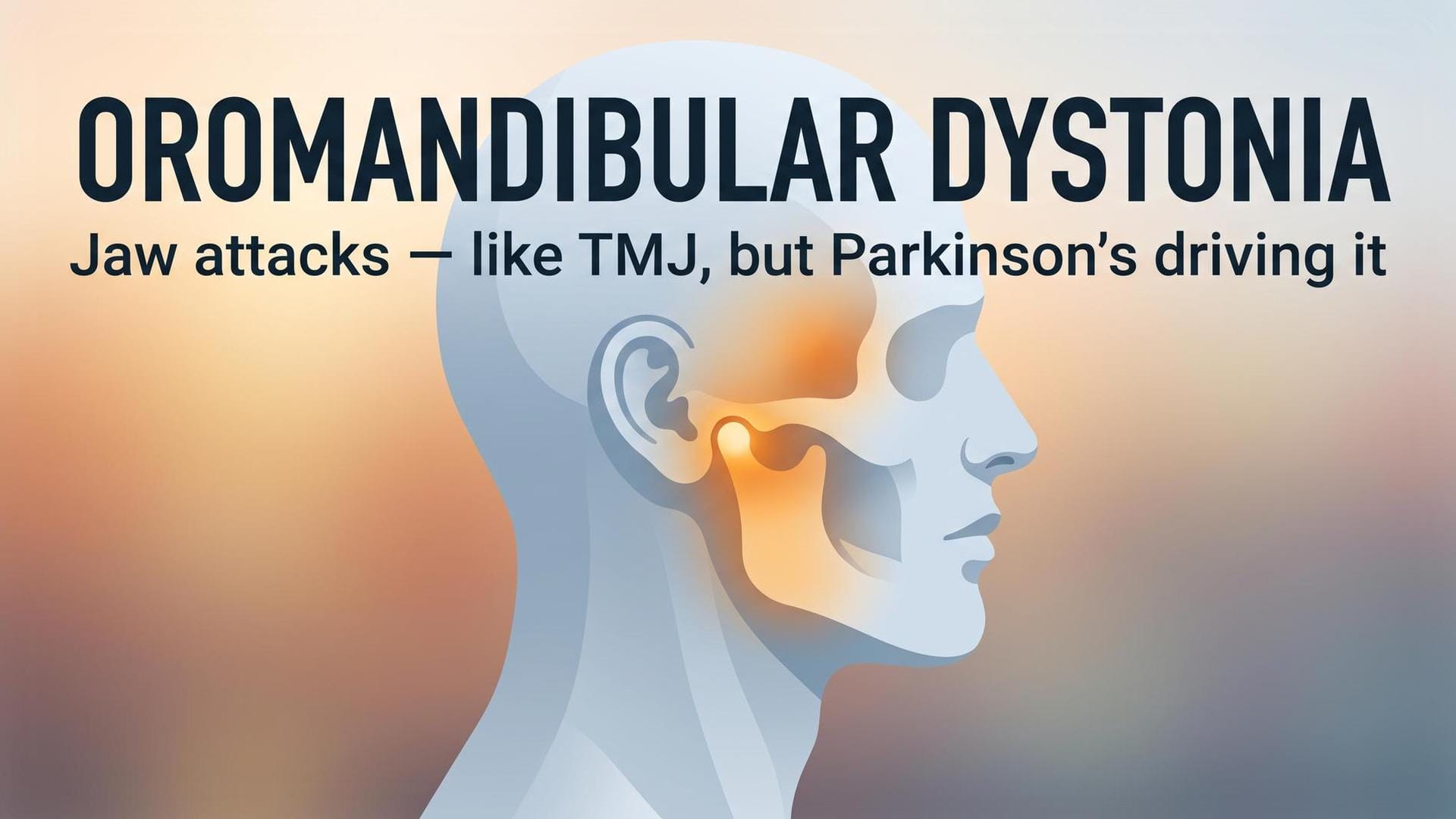
It began in my jaw. Oromandibular dystonia means the muscles around the jaw and mouth clench or twist involuntarily. For me, it is not the same thing as a tremor. Parkinson’s shows up in my body as stiffness, rigidity, and fine-motor trouble, and dystonia can become worse with stress, fatigue, and major disruption.
Ask me how I know: we had just moved house. The pain became bad enough that I started reaching for anything that might help. Like many people, I reached for the shelf marked “natural.”
My two-product experiment
Test 1: CBD product sold as THC-free
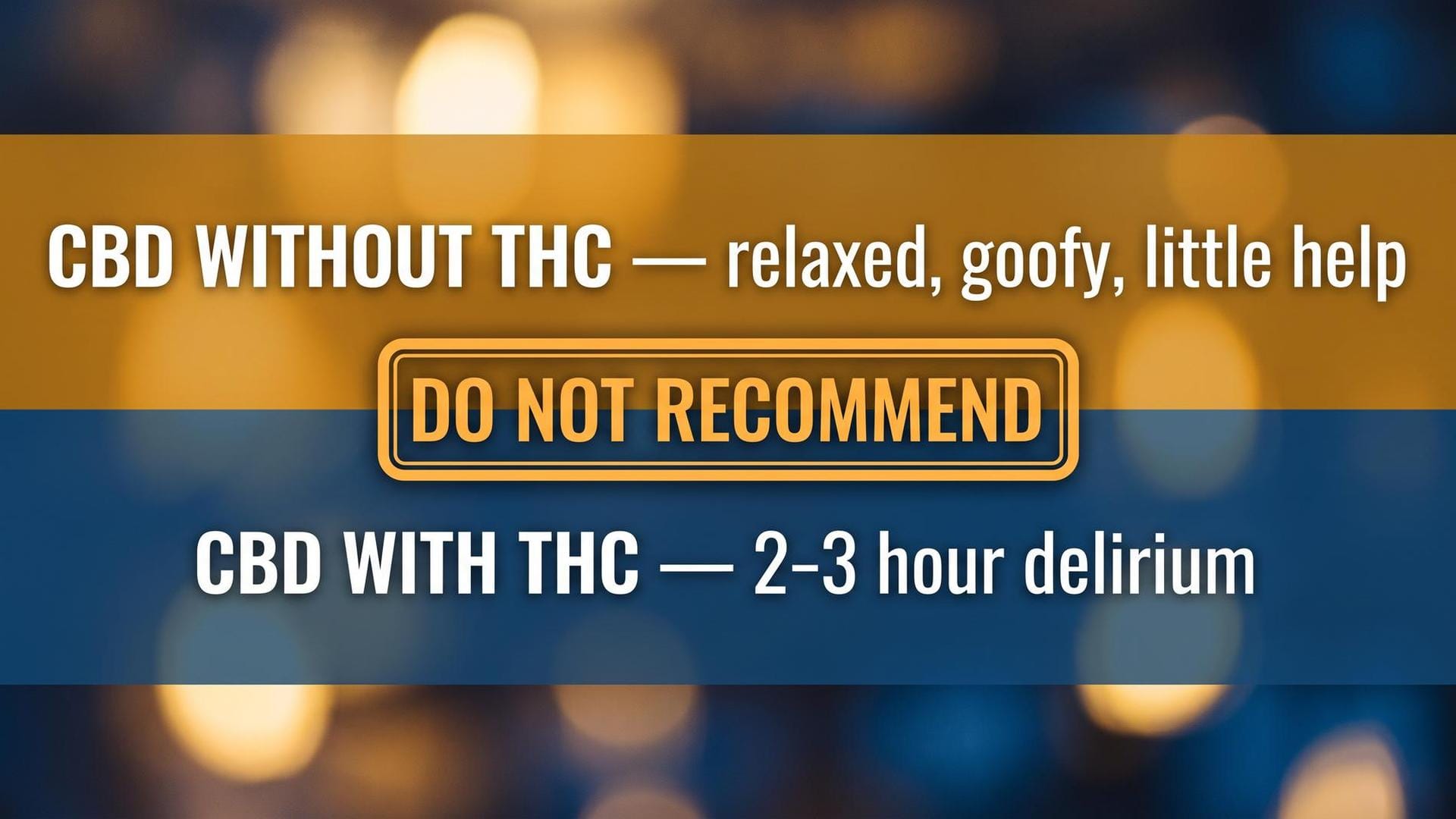
The first product was sold as CBD without THC. I noticed mild relaxation, a little sleep-talking, and minimal relief from the dystonia. It was not a dramatic reaction, but it also was not much help.
“Sold as THC-free” is the careful wording I use here. I did not independently test the bottle, so I cannot claim what was or was not in it beyond its label.
Test 2: CBD product containing THC
The second test was different. Within a short window, I became confused and disoriented—not just slightly relaxed or “fuzzy.” It felt like the delirium I have experienced when an infection spikes my Parkinson’s symptoms. I was not quite myself, and that was frightening.
The reaction affected the cognitive, emotional, and physical sides of the experience at once. I was thinking poorly, regretting the decision, and still dealing with the jaw problem I had hoped to ease.
| Test 1: sold as CBD without THC | Test 2: CBD with THC | |
|---|---|---|
| Dystonia | Minimal relief | No relief; felt worse overall |
| Cognitive effects | Mild or none noticed | Confusion and disorientation |
| My verdict | Not worth repeating | Do not recommend or repeat |
What might explain the reaction?
There is an important distinction between what happened to me and what science can prove about why it happened. I cannot diagnose an interaction from timing alone. The concern is that cannabis products can have central nervous system effects, and established interaction references warn that cannabidiol or cannabis used with levodopa may increase side effects such as dizziness, drowsiness, confusion, and difficulty concentrating.
Mayo Clinic’s medication information lists cannabidiol and cannabis among substances requiring caution with levodopa, and lists high-protein food as another interaction consideration. Drugs.com describes the CBD–Sinemet interaction as moderate. The American Parkinson Disease Association says clinical-trial evidence for CBD-related health claims in Parkinson’s remains minimal and recommends discussing any trial with a movement-disorders specialist.
For related background, see my guides to levodopa side effects and long-term use and protein and levodopa timing. Those articles discuss my medication experience and food-timing questions separately; they are not instructions to change your prescription or diet without clinical advice.
That is enough for me to take the warning seriously. It is not enough for me to claim that CBD definitely slowed levodopa clearance, that THC definitely caused delirium, or that my experience predicts what will happen to someone else.
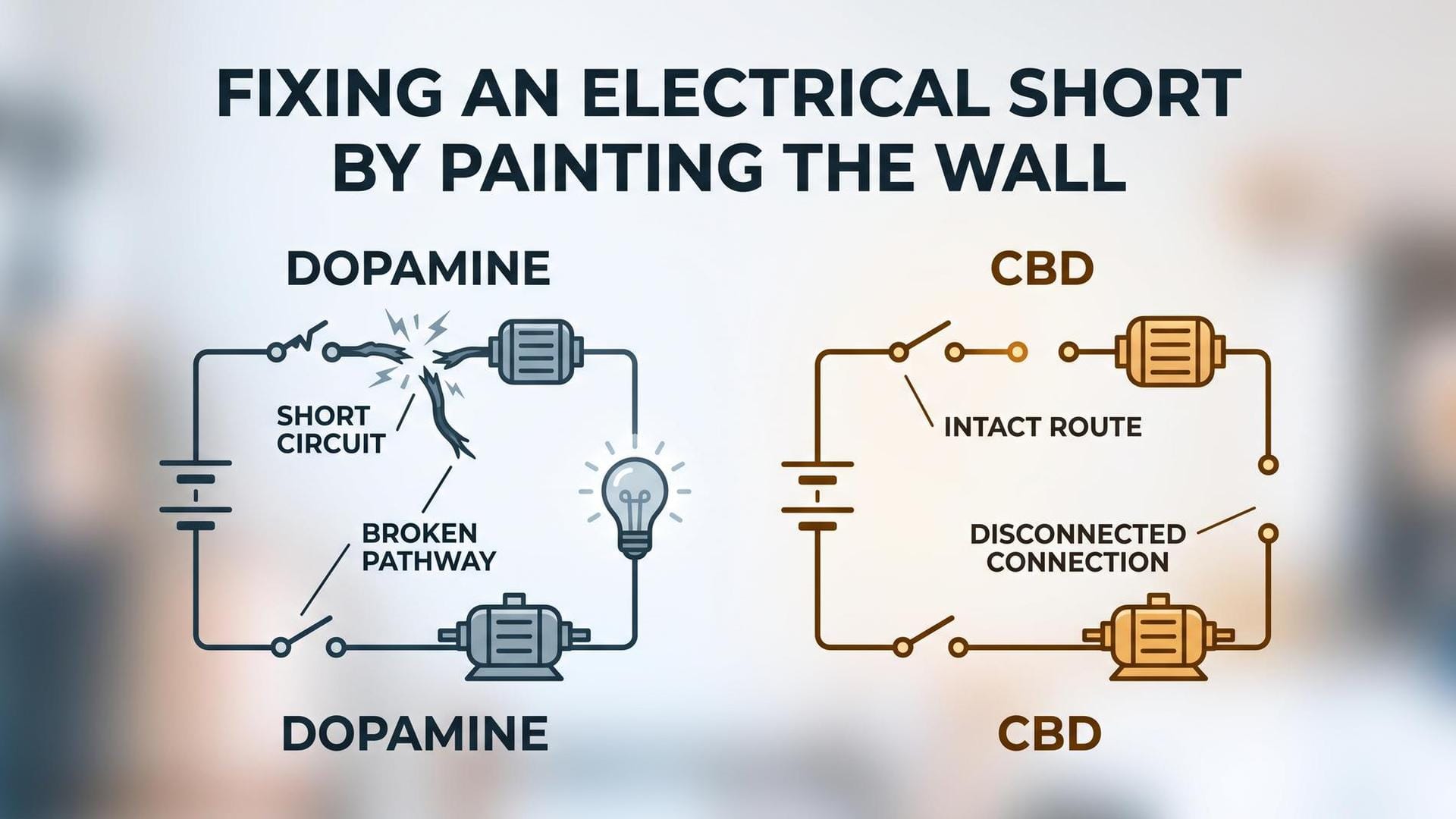
The three lenses
Cognitive
The confusion and disorientation were the scary part. This was not simply “feeling weird.” My thinking went offline for a while, and I had to take that seriously.
Emotional
I was in real pain, exhausted from a house move, and desperate for relief. When the test went wrong, I felt shame because I had done this to myself with a bottle I bought hoping for help. If you have made a similar decision, you are not stupid or alone. Pain and desperation are powerful decision-makers.
Physical
The whole thing began with my jaw. The painful irony is that I reached for a whole-body substance and ended up adding possible dizziness, balance, and cognitive problems to the physical problem I already had.
Who this post is for
If you are newly diagnosed
None of this is your future right now. This is my story at year nine, after a house move, while taking several medications. Do not treat my experience as a checklist. Before adding an oil, supplement, or “natural” remedy, show the exact product and label to your neurologist or pharmacist.
If you have been living with Parkinson’s for years
You know what “off” feels like, and you may have tried things you would rather not admit to. I understand the temptation. But when the medication stack is deep, an untested addition deserves more—not less—careful review.
If you are a caregiver
You may be the person who notices confusion or delirium first. Be the second pair of eyes. Ask whether a new supplement or oil was checked with the neurologist or pharmacist, and keep the bottle or label available if a reaction occurs.
What the research actually says
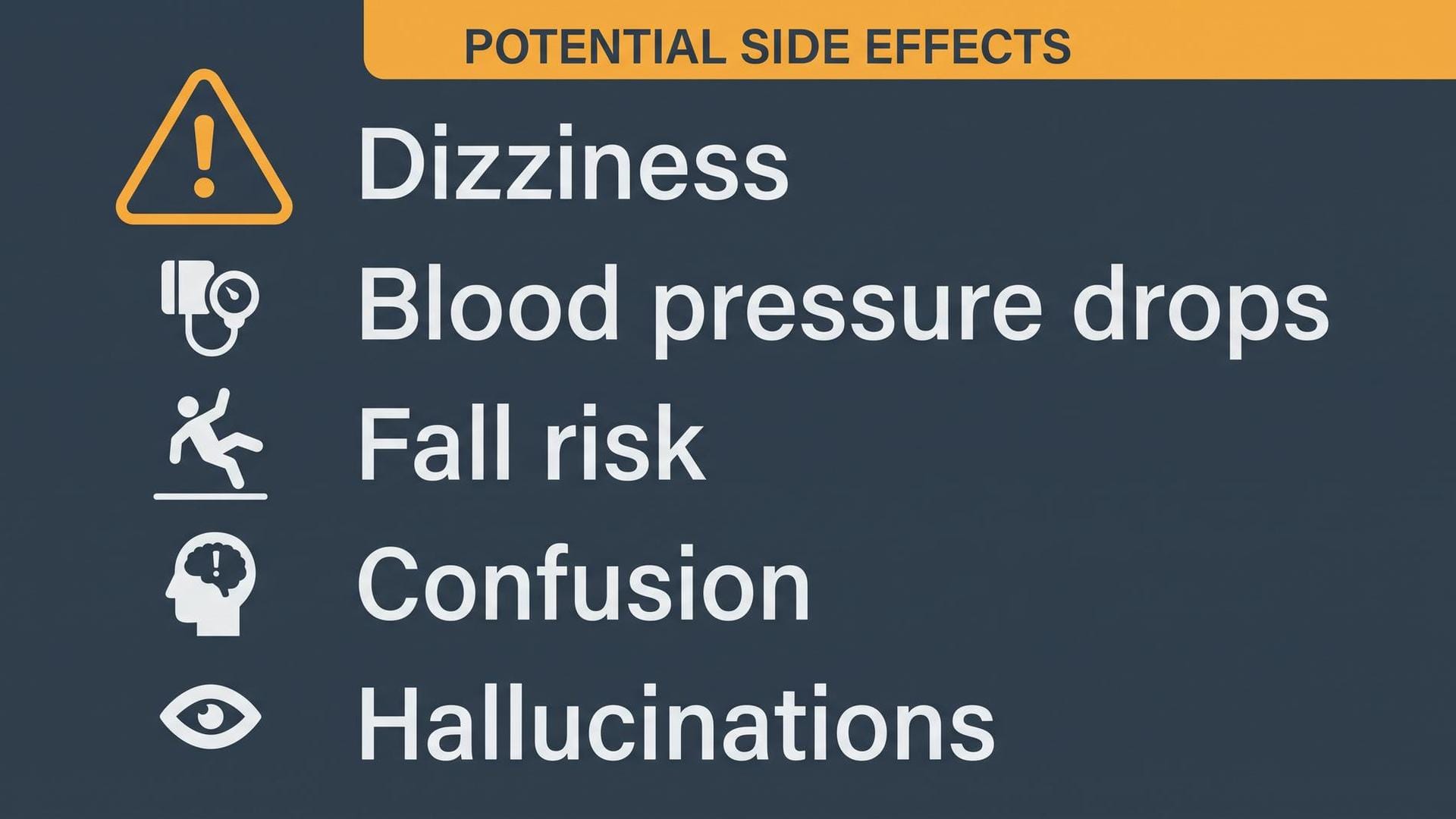
Cannabinoids are being studied for symptoms such as pain, sleep problems, and motor symptoms, but the evidence is limited and products, doses, and formulations vary. Some research and surveys report possible benefit; that does not establish that an over-the-counter product will help, or that one formulation is safer than another.
THC can affect perception, memory, judgment, and reaction time. People with Parkinson’s may already be vulnerable to fatigue, nausea, hallucinations, confusion, or other non-motor symptoms. That does not mean everyone will react badly. It does mean the risk deserves an individual conversation with the care team.
“Natural” does not mean “interaction-free.” A supplement can be biologically active, vary from its label, and affect a medication regimen. Do not change prescription medication or stop treatment abruptly because of this post.
What I do instead
- Talk to the neurologist or pharmacist first. Bring the exact bottle, label, CBD/THC amounts, and your medication list.
- Check interactions formally. Online checkers are useful starting points, but they are not a substitute for a clinician who knows your history and product.
- Use a targeted plan for the jaw. Ask the movement-disorders team about evidence-based options for dystonia and rigidity. Do not assume that a device, diet, supplement, or “natural” product has no interactions simply because it is sold over the counter.
What I reach for instead
When I want to try something for Parkinson’s symptoms, I would rather use a tool I have actually used and reviewed than reach for a mystery oil with an unclear label.
My experience with the VILIM Ball
I have used the VILIM Ball for about a year. In my experience, it became a practical, drug-free support tool for tremor, morning dystonia, and difficult moments—not a cure, and not a replacement for prescribed treatment. The effect is temporary, and it may not help every type of tremor or every person.
Read my full VILIM Ball review for the benefits, limitations, safety questions, and what daily use looked like over time.
Visit the VILIM Ball website and try code LWP50 for the current offer. Discount amounts can change, so check the price at checkout.
Affiliate disclosure: The VILIM link is an affiliate link. If you purchase through it or use my code, I may earn a commission at no extra cost to you. That relationship does not change my review or my recommendation to speak with your neurologist before adding any new therapy or device.
If you are looking for other non-drug support ideas, you can also read my firsthand BeechBand account—which is not a sponsored or affiliate placement—or explore Sensate for calming and relaxation support. These are optional tools, not Parkinson’s treatments or substitutes for medical care; the Sensate link is an affiliate/partner link, and any offer can change.
Resources
These are starting points for a safer conversation—not instructions to self-treat.
- Bring the label: Take a photo of the front and ingredients panel, including CBD and THC amounts per serving, batch information, and the product’s source.
- Bring your medication list: Include prescriptions, over-the-counter medicines, supplements, and the times you take them. Do not stop or change prescribed medication without your care team.
- Ask for an interaction review: A pharmacist or neurologist can assess the specific product and your regimen. Online checkers can be a starting point, but they may not cover every formulation or supplement.
- Track what happened: Write down the product, amount, time, symptoms, duration, food, sleep, and any other new exposure. A caregiver’s observations can be especially useful when confusion is involved.
- Parkinson’s information: The Parkinson’s Foundation and American Parkinson Disease Association provide general education and support resources.
- Medication and nutrition questions: Ask your neurologist, pharmacist, or Parkinson’s dietitian about levodopa timing, protein, and any supplement before changing your routine.
- Urgent symptoms: For ongoing severe confusion, hallucinations, trouble breathing, chest pain, seizure, loss of consciousness, or immediate danger, contact local emergency services. In the United States, Poison Control is 1-800-222-1222; use your local poison centre elsewhere.
When to get urgent help
Confusion, hallucinations, severe drowsiness, trouble breathing, chest pain, seizure, loss of consciousness, or an ongoing or worsening reaction need urgent medical attention. If a serious reaction happens after a supplement or cannabis product, do not drive yourself; contact emergency services or your local poison centre as appropriate, and keep the product packaging for clinicians.

My bottom line
The CBD product sold as THC-free did very little for my dystonia. The THC-containing product was followed by confusion and disorientation that I do not want to experience again. I cannot tell you exactly why it happened, and I cannot tell you what will happen to you. I can tell you my decision: I would not repeat the THC experiment, and I would speak with my neurologist or pharmacist before adding any cannabinoid product to a Parkinson’s medication regimen.
Sources and further reading
- American Parkinson Disease Association: Use of Cannabidiol (CBD) for PD Symptoms
- American Parkinson Disease Association: Medical Marijuana and Parkinson’s Disease
- Drugs.com: Cannabidiol and Sinemet interaction
- Mayo Clinic: Carbidopa and levodopa—interactions and side effects
- Patel et al., “Pros and Cons of Marijuana in Treatment of Parkinson’s Disease,” Cureus, 2019
- Pizzolato et al., “Cannabis Dopaminergic Effects Induce Hallucinations in a Patient with Parkinson’s Disease,” Medicina, 2021 (case report; it cannot predict everyone’s reaction).
Medical disclaimer: This post is my personal experience and is for educational purposes only. It is not medical advice and is not a substitute for professional care. Always consult your neurologist or pharmacist before adding, changing, or stopping any supplement or medication—especially anything that may affect levodopa or cognition.
Updated August 25, 2026. Evidence and product formulations can change; sources should be rechecked before making health decisions.