




Written from lived experience by David Gebhart, who has taken carbidopa-levodopa for 9 years. This is patient perspective and research, not medical advice — always consult your neurologist.
The quick answer: Long-term levodopa causes no structural damage to neurons and doesn’t shorten life expectancy. What it can do is disrupt how your digestive system functions — slower stomach emptying, constipation, and unpredictable absorption. Those are real, but manageable once you understand them.
Prefer to watch? Here’s the video companion to this post:
🧭 Start Where You Are
This guide meets you at your stage — jump to the part written for you:
- 🌱 Just diagnosed? Start here
- 💛 Caring for someone with PD? Read this
- 🧠 Years into the journey? This part’s for you
In this guide
- Is levodopa safe to trust?
- Will it stop working after 10 years?
- What I actually take every day
- What long-term use does to your body
- 4 things that actually help
- Start where you are: your stage
- FAQ
Can You Trust Levodopa? Three Fears, Answered
The evidence, at a glance:
| The fear | What the research says |
|---|---|
| “Delaying it saves it for later” | Mayo Clinic: deferring or limiting the dose confers no long-term benefit |
| “It worsens early Parkinson’s” | Studies found no evidence of this; it may slow symptom progression |
| “It’s toxic to the brain” | Decades of data: not neurotoxic, does not shorten life expectancy |
From my 9 years: Distrust spreads — first the pill, then the doctor, then the whole system. My neurologist here in BC has an 800-patient waitlist, so I took some responsibility for my own toolkit. That’s different from distrusting the medicine itself.
On mucuna (natural levodopa): Two reasons I don’t use it — it’s not FDA-regulated (batch strength swings), and it’s levodopa without carbidopa, the ingredient that lets you take a lower dose with fewer side effects.
Deeper dive: Levodopa Fears and Misconceptions — What Are We Really Afraid Of?
Does Levodopa “Stop Working” After 8–10 Years?
No — but it feels like it does. Levodopa doesn’t lose effectiveness. Parkinson’s keeps progressing and creates new symptoms the drug was never able to treat:
- Balance problems and falls
- Fatigue, sleep disruption, cognitive changes
- Blood pressure swings, constipation
The medication is still doing its job. The disease has simply moved into territory levodopa can’t reach. That reframe changes how you plan your whole treatment.
What I Actually Take Every Day
⚠️ Not a recommendation. One patient’s routine at year 9, shared for context. Doses are personalized to my body, my progression, and my neurologist’s guidance. Talk to your own doctor.
Here’s my actual daily schedule as of July 2026 — eight doses across 24 hours, mixing immediate-release and controlled-release carbidopa-levodopa, plus mood and sleep support:
| Time | IR 100/25 | CR 200/50 | Escitalopram 10mg | Clonazepam 0.5mg |
|---|---|---|---|---|
| 06:30 | 1.5 | 1.5 | 10 mg | — |
| 10:00 | 1 | 1.5 | — | — |
| 13:00 | 1.5 | 1.5 | — | — |
| 16:00 | 1.5 | 1.5 | — | — |
| 19:00 | 1.5 | 1.5 | — | — |
| 22:00 | 1 | 1.5 | — | 0.5 mg |
| 01:00 | 1 | 1.5 | — | — |
| 04:00 | 1 | 1.5 | — | — |
| Daily total | 10 tablets ~1000 mg L-dopa | 12 tablets ~2400 mg L-dopa | 10 mg | 0.5 mg |
Why so many doses? Nine years in, my “on” window from a single IR dose is short. Overlapping IR (fast, ~30-minute onset) with CR (slower, longer tail) keeps me at a steadier plasma level and softens the peaks and troughs. The overnight doses at 01:00 and 04:00 aren’t for daytime function — they’re for turning over in bed, getting to the bathroom, and preventing a locked-up morning.
The two mood/sleep meds:
- Escitalopram 10 mg AM — for mood. Depression and anxiety are core PD symptoms, not just reactions to the diagnosis.
- Clonazepam 0.5 mg at 22:00 — helps me sleep and reduces the vivid, thrashing REM-sleep behavior common in PD.
From my 9 years: There’s no clinical test that confirms Parkinson’s — the “test” is whether levodopa works. Mine worked on the first dose. I started at half a pill a day and titrated up slowly.
What Long-Term Levodopa Actually Does to Your Body
Were we built to process this much? No. Your body makes tiny amounts of dopamine; the gut transporters evolved for dietary amino acids, not hundreds of milligrams of pharmaceutical levodopa daily for decades.
Why the doses are so high — your body resists the drug
- Much of it breaks down before reaching the brain (that’s why carbidopa exists)
- Certain gut bacteria (Enterococcus faecalis) literally consume levodopa in the intestine
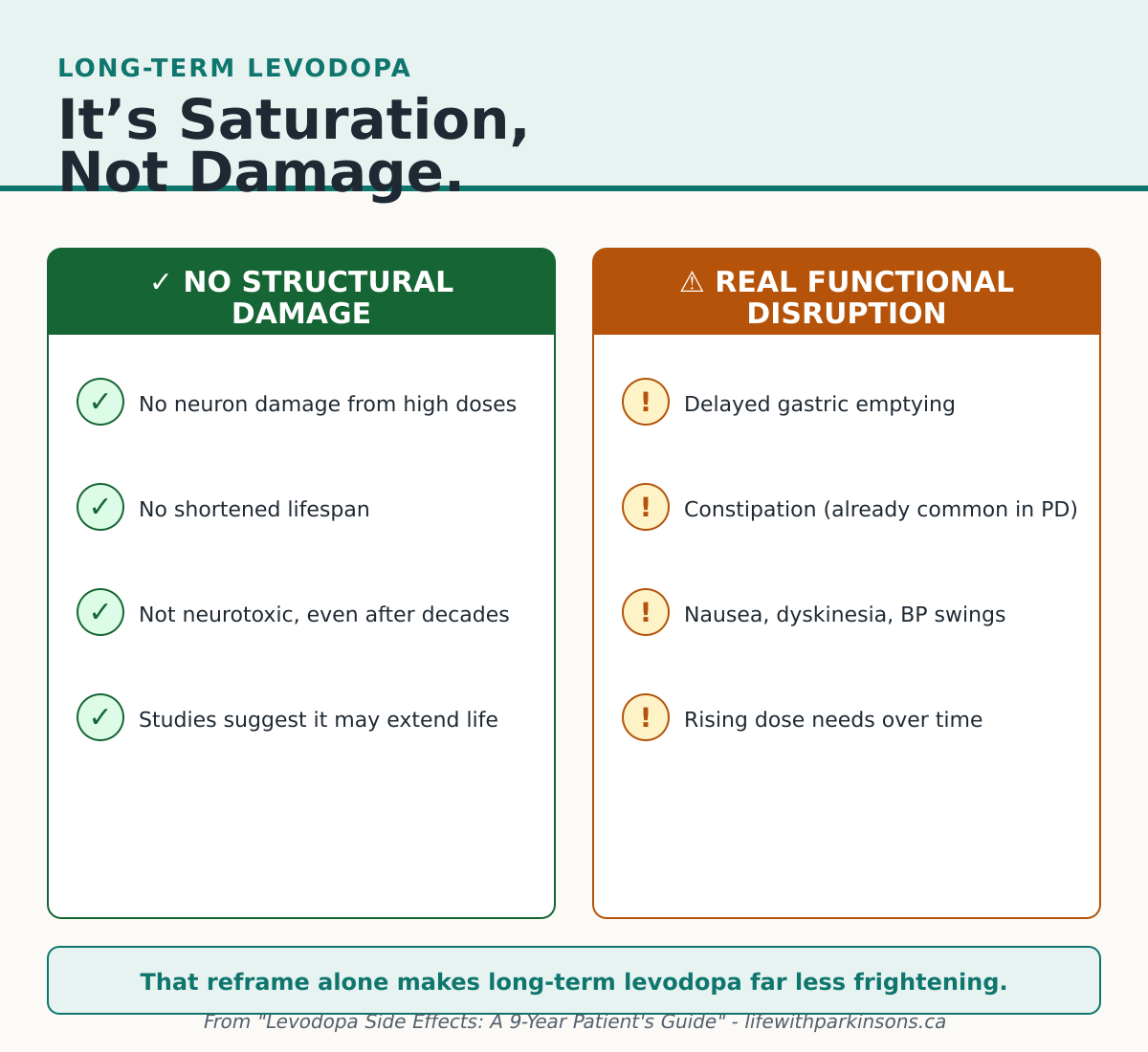
The key distinction — function vs. structure
| ✅ No structural damage | ⚠️ Real functional disruption |
|---|---|
| No neuron damage from high doses | Delayed gastric emptying → unpredictable “on” time |
| No shortened lifespan | Constipation (already common in PD) |
| Not neurotoxic, even after decades | Nausea, dyskinesia, BP instability, rising dose needs |
It’s saturation, not damage. That single reframe makes the whole thing far less frightening.
Deeper dive: Nobody Warned Me About These L-DOPA Effects
Why I dug into this: In waiting rooms I kept noticing visible muscle loss in people with PD. A viewer once messaged me — his wife had to physically hold him up to stand. Looking back with what I know now about protein absorption, a protein-redistribution strategy might have helped. Nobody told him. Nobody told me either.
4 Things That Actually Help
- Hydrate on purpose. Better hydration → better gastric emptying → more consistent absorption. I use chamomile tea to make it a ritual, not a chore.
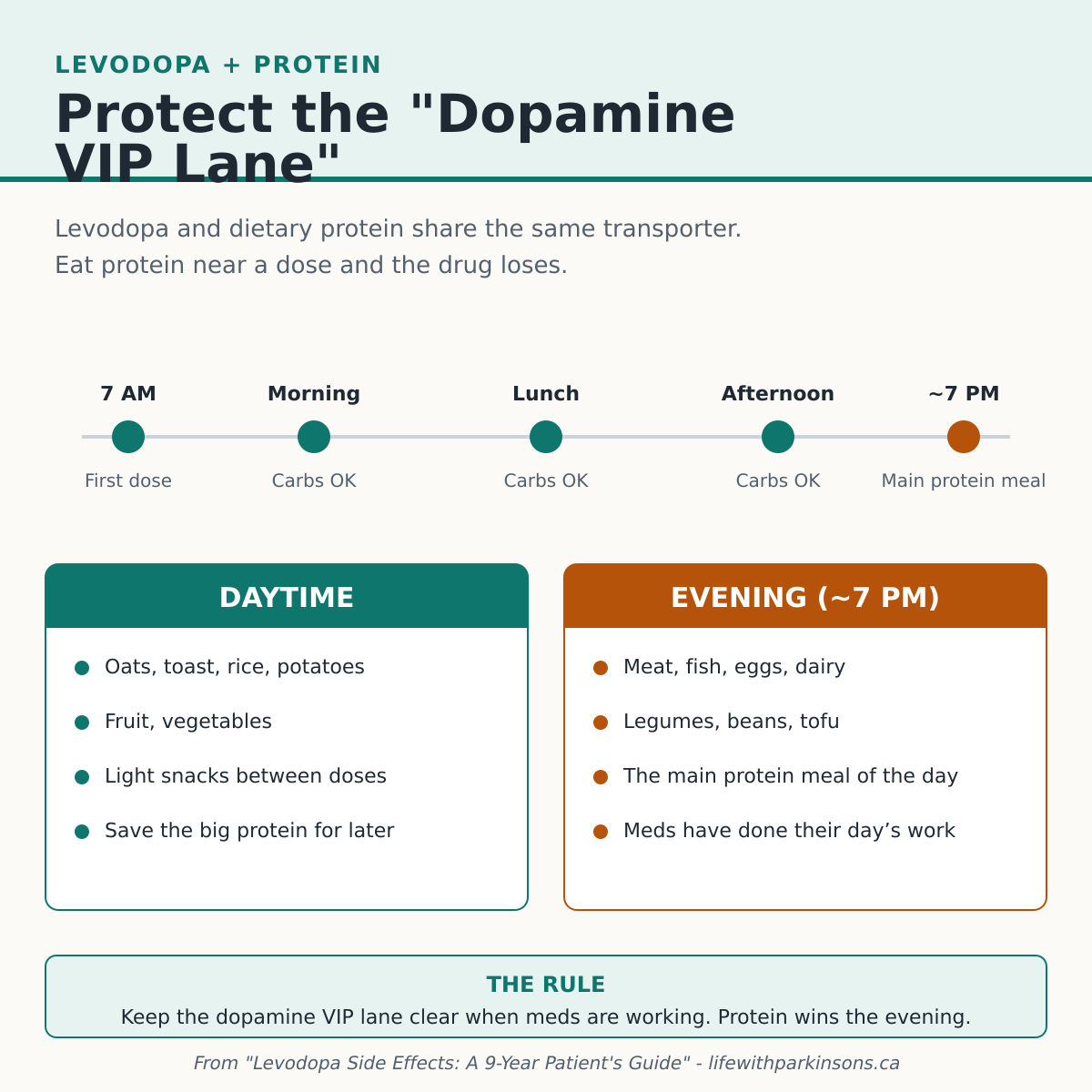
- Protect the “dopamine VIP lane.” Levodopa and dietary protein share the same transporter — eat protein near a dose and the drug loses. Fix: carbs during the day, main protein meal ~7 p.m.
- Manage the stress load without it feeling like punishment. Breath work, gentle movement, time outside — framed as a reward, not a chore, so you actually show up daily.
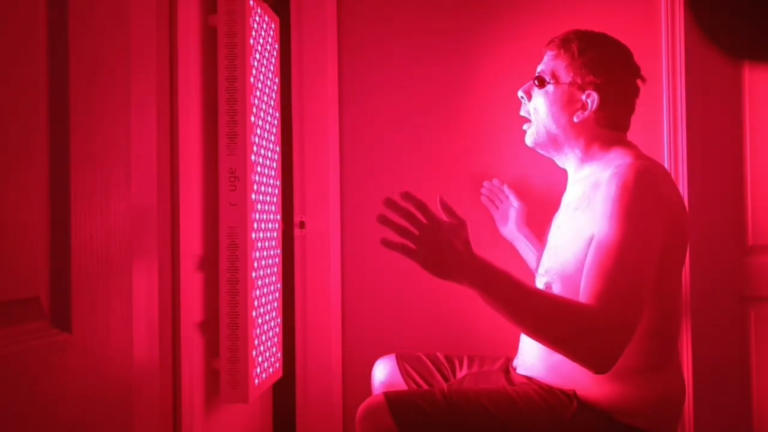
- Support the gut microbiome. I’ve used Rouge Care Canada red light panels for ~3.5 years — emerging photobiomics research suggests red/near-infrared light supports beneficial gut bacteria. Certified by Health Canada. Rouge Care wrote up the mechanism here: Harnessing the Power of Red Light Therapy for Gut Health.
Start Where You Are: Your Stage
The same L-DOPA science means something different depending on where you are in the journey. Here’s the part written for you.
🌱 For the Newly Diagnosed: Read This First
Your one job right now: don’t let fear make your first decisions. The biggest early mistake is delaying levodopa to “save it for later” — the research is clear that this confers no benefit, and the disease doesn’t wait.
- You don’t have to become an expert this week. Start the medication your neurologist prescribed, notice how you respond, and write it down.
- The “8–10 year” number you’ve probably already Googled is misleading — the drug doesn’t expire; the disease progresses. Knowing that difference now saves you years of dread.
- One question for your next appointment: “What symptoms will levodopa not treat, and how will we handle those?” It reframes your whole plan.
From David: I started at half a pill a day and titrated up slowly. My whole channel exists because I wish someone had handed me a calm, honest guide the week I was diagnosed. This is that guide.
👉 Newly diagnosed? Start your path here
💛 For Caregivers: What to Watch For
You’ll often notice the functional changes before your person does. The two that matter most and are easiest to miss:
- Unpredictable “on/off” isn’t them being difficult — it’s absorption. A dose that “worked yesterday” can stall today because of slow gastric emptying or meal timing.
- Muscle loss is a quiet emergency. If standing or walking is getting harder, don’t just chalk it up to “getting worse” — protein absorption (not just intake) may be the hidden culprit. Bring it up with the neurologist early.
- Protect the medication schedule like a job. Meals near a dose can block it. Helping with timing is one of the most valuable things you can do.
From David: A viewer once messaged me — his wife had to physically hold him up to stand, and nobody could tell them why. When you’re caring for someone, you’re usually begging them to face this with you. Facing it alone is very lonely. You noticing these things matters more than you know.
👉 Caregiver support and resources
🧠 For Those Years Into the Journey
You’ve earned some hard-won knowledge — this section is about the things that change late. You already know the basics; here’s what tends to surface after years on L-DOPA:
- Rising dose needs aren’t failure. Gut metabolism shifts over time, and certain gut bacteria literally consume your levodopa. Needing more isn’t you “using it up.”
- Protein redistribution becomes a bigger lever, not a smaller one. The longer you’re on it, the more your “on” time and muscle mass depend on keeping the dopamine VIP lane clear — carbs by day, main protein meal ~7 p.m.
- Now’s the time to add supportive tools, not replace your meds — hydration rituals, stress-load management, gut-microbiome support. The medication does its job best when the body isn’t fighting it.
From David: I’m nine years in and still digging, because the general medical system doesn’t always have time to hand us these tools. If you’ve been at this a while, you’re not looking for hope — you’re looking for the next practical thing. That’s what this section is for.
Frequently Asked Questions
Is levodopa safe to take long term?
Yes. Decades of research show levodopa causes no structural damage to neurons and does not shorten life expectancy — studies suggest it may even extend it. Long-term use can disrupt how your digestive system functions (delayed stomach emptying, constipation, unpredictable absorption), but these are manageable and are not permanent damage.
Does levodopa stop working after 8–10 years?
Not exactly. Levodopa doesn’t lose its effectiveness — Parkinson’s keeps progressing and produces new symptoms (balance problems, fatigue, sleep and cognitive changes) that levodopa was never able to treat. It feels like the drug “stopped working,” but really the disease moved into territory the medication can’t reach.
Why can’t I eat protein when I take levodopa?
Levodopa uses the same amino-acid transport system as dietary protein, so a large protein meal competes with your dose for absorption — and levodopa loses. Many people redistribute protein: mostly carbohydrates during the day when meds are active, with the main protein meal pushed to the evening (around 7 p.m.).
Is mucuna (natural levodopa) better than prescription carbidopa-levodopa?
For most people, no. Mucuna isn’t FDA-regulated, so batch strength varies, and it’s levodopa without carbidopa — the ingredient that lets you take a lower levodopa dose with fewer side effects. Always discuss with your neurologist before changing anything.
Should you delay starting levodopa to “save” it for later?
Research does not support delaying levodopa. The Mayo Clinic notes that deferring it or limiting the dose confers no long-term benefit, and studies found no evidence that levodopa worsens early Parkinson’s disease.
What are the main long-term side effects of levodopa?
The most common are nausea and GI discomfort, dyskinesia (involuntary movements), blood pressure instability, and a gradual need for higher doses. The two that quietly drive the rest are delayed gastric emptying and constipation.
The Bottom Line
No long-term structural damage. Real functional challenges. All of it manageable once you understand it.
You’re doing the best you can with the circumstances you’re in.

A Word About Rouge Care Canada
The gut-microbiome piece in this guide is the part I get asked about most, so here’s the honest version of my own setup. I’ve used Rouge Care Canada red light panels for about three and a half years — well before there was any relationship between us. They’re a Canadian company and their devices are Health Canada certified, which mattered to me.
What I can tell you honestly: red light therapy is not a Parkinson’s treatment and it is not a substitute for levodopa. The research on photobiomodulation and the gut microbiome is early — promising, but early. Rouge Care has written up the mechanism themselves if you want to read the reasoning: Harnessing the Power of Red Light Therapy for Gut Health.
I mention it because it’s genuinely part of my daily routine, not because it will fix anyone’s Parkinson’s. Talk to your neurologist before adding anything new.
[FTC Disclosure: This post contains my affiliate link for Rouge Care Canada. If you purchase using my link, I earn a small commission at no extra cost to you. I have personally paid for and used these panels for roughly three and a half years — all opinions are my own.]