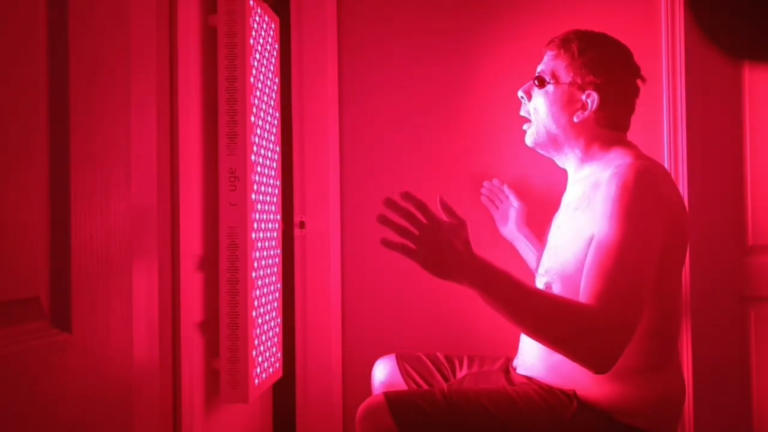





If you live with Parkinson’s disease, this is the post I wish I’d read earlier. Not because it would have made the experience easy, but because it would have helped me understand what was happening before things got so far out of control.
Key Takeaways
- Parkinson’s disease changes how the body responds to common problems like infection and dehydration. What might be manageable for someone else can become a full medical crisis for us.
- Sudden confusion in Parkinson’s should always raise the possibility of infection, dehydration, or both. Don’t wait for a dramatic fever or obvious wound.
- Autonomic dysfunction matters more than most people realize. Blood pressure, temperature control, digestion, hydration, and medication absorption can all go sideways fast.
- Dehydration in Parkinson’s is not just about being thirsty. It can worsen low blood pressure, shorten ON time, increase falls, and push brain fog toward delirium.
- Caregivers are often the first line of defense. When the person with Parkinson’s can’t advocate clearly, the caregiver’s instincts can be life-saving.
- Recovery after infection can take weeks or months, not days. Even after the infection clears, medication response, stamina, and cognitive sharpness may lag far behind.
- The good news is that once you understand the pattern, you can respond faster and smarter. That knowledge can protect both patients and caregivers.
The Day a Fingernail Almost Killed Me
The last month was one of the hardest stretches I have faced since my Parkinson’s diagnosis.
From the outside, it would have sounded almost ridiculous: a fingernail infection. Something small. Something ordinary. Something most people would deal with and move on from.
But that is exactly the point of this article.
What most people don’t understand about Parkinson’s disease is that the real danger often isn’t the symptoms you can see — it’s the systemic vulnerability that turns everyday threats like infection and dehydration into medical emergencies.
I was spending more and more time on the couch. My thinking was off. My body felt like it was slipping away from me. I was confused, foggy, and deeply unwell. There are moments from that stretch I still don’t fully remember clearly, which is unsettling in its own right. When your brain starts failing you, even your memories feel unstable.
Hayley could see something was catastrophically wrong before I could explain it. That matters, because one of the cruelest parts of Parkinson’s is that when things get bad enough, your ability to describe what is happening can collapse right when you need it most.
The shocking part is this: I wasn’t having a classic Parkinson’s crisis. I had an infected fingernail. A paronychia. A small infection near the nail bed that escalated into something much bigger because my Parkinson’s brain and body did not respond the way a healthier nervous system might have.
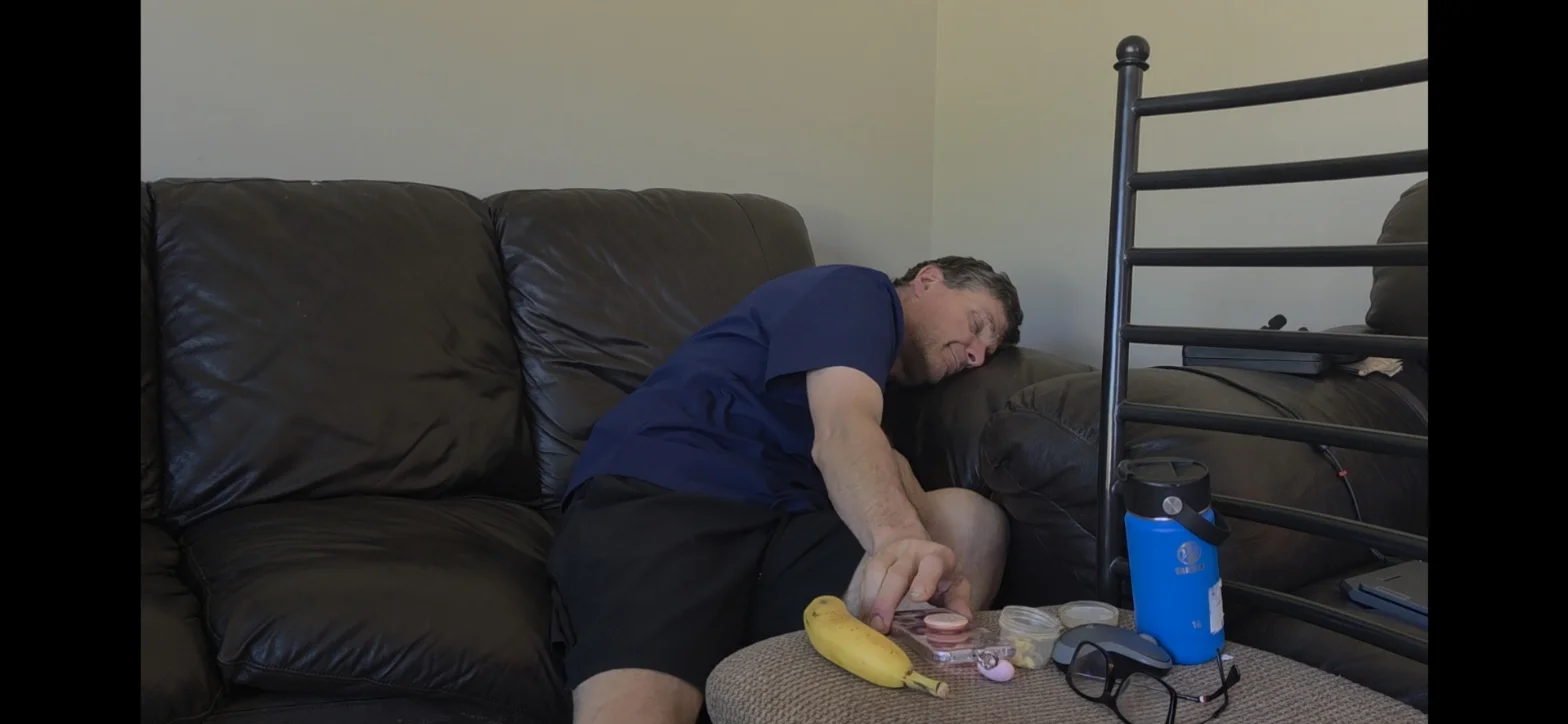
If you haven’t read the full story yet, I go deeper here: Parkinson’s, Paronychia, and the Infection That Nearly Took Me Out.
That experience forced me to confront something I wish more doctors, patients, and caregivers said plainly: Parkinson’s is not just a movement disorder. It is a whole-body vulnerability disorder. Yes, tremor and stiffness are real. But the hidden danger is how Parkinson’s rewires your response to stress, illness, inflammation, poor sleep, dehydration, medication disruption, and infection.
That is why a minor wound can feel like a neurological explosion.
That is why dehydration can wreck your thinking.
That is why caregivers need a very different emergency radar than most families realize.
“A small infection for us is not a small infection.”
Why Parkinson’s Makes Everything Different
The Nervous System You Didn’t Know You Had
Most people think of Parkinson’s disease as a dopamine problem that causes tremor, slowness, stiffness, and balance trouble. Those things are true. But they are not the whole story.
There is another system involved that many people are never properly warned about: the autonomic nervous system.
That is the part of your body running in the background all day long. It helps control blood pressure, heart rate, temperature regulation, sweating, digestion, bladder function, bowel movement, and how your body handles stress. In simple language, it is your internal autopilot.
And with Parkinson’s, that autopilot can get scrambled.
So when people ask why Parkinson’s patients get hit so hard by things that seem minor, this is part of the answer. We are not starting from a stable baseline. We are starting from a nervous system that is already working overtime just to keep basic systems running.
That means when something extra enters the picture — infection, dehydration, poor sleep, stomach upset, medication timing problems — the margin for error gets very small.
A healthy person might get run down. A person with Parkinson’s might lose blood pressure control, lose medication absorption, become cognitively foggy, and spiral into a much more dangerous state.
That doesn’t mean every infection turns into disaster. But it does mean the body has fewer backup systems than people assume.
When Your Immune System Can’t Keep Up
Infection creates inflammation. That sounds obvious, but in Parkinson’s the consequences can be very different.
When the immune system detects an infection, it releases inflammatory signals called cytokines. Those signals are meant to help the body fight back. But in a Parkinson’s brain, that inflammatory wave can create far more neurological disruption than most people expect.
I sometimes think of it like a sensitive nuclear reactor. If the system is already unstable, even a problem that looks small from the outside can cause chaos internally.
That is why confusion matters so much.
In the general population, people tend to think of infection in very visible terms: redness, pain, swelling, fever. In Parkinson’s, those signs may still be present, but sometimes the first truly alarming sign is cognitive. Delirium. Sudden confusion. A dramatic personality shift. Bad judgment. Disorganized thinking. A person who just seems not like themselves.
That is not an overreaction. That is a warning.
If you’ve seen this with urinary tract infections, you’ll recognize the pattern. I wrote more about that here: Urinary Tract Infections and Parkinson’s Disease: What You Need to Know Right Now.
The lesson is broader than UTIs, though. Infection anywhere in the body can create a neurological storm in someone with Parkinson’s. A fingernail. A tooth. A bladder infection. A chest infection. A skin wound. None of these should be brushed off casually just because they sound small.
The Medication Absorption Problem
Then there is the part that many of us know in our bones but struggle to explain: when your body is under stress, your Parkinson’s medication often stops behaving normally.
During illness, the gut can slow down. Digestion changes. Appetite changes. Nausea can show up. Constipation can worsen. Inflammation rises. Hydration falls. All of that affects how levodopa gets absorbed.
So now you have a double hit.
The infection itself is stressing the brain and body.
At the exact same time, the medication you rely on to function may stop working the way it usually does.
That can mean shorter ON periods, deeper OFF periods, more rigidity, more slowness, more tremor, more dystonia, and less ability to think clearly. It becomes a vicious cycle. You are sicker, and the tools you use to stay stable are suddenly less reliable.
That is one reason these situations feel so frightening. It is not just that you are ill. It is that your whole Parkinson’s management system starts wobbling right when you need it most.
The Dehydration Domino Effect
You’re going to say, Dave, what the heck does drinking water have to do with Parkinson’s?
More than I ever imagined.
The Blood Pressure Connection
One of the hidden problems many of us deal with is orthostatic hypotension — low blood pressure when standing up. It can feel like lightheadedness, weakness, tunnel vision, wobbliness, or that split second where you stand and wonder if your body is about to leave the chat.
That is not just annoying. It can be dangerous.
Dehydration makes that whole problem worse because it reduces the amount of blood in your body. When you stand up, there is less circulating volume available, and that makes it even harder to keep your blood pressure where it needs to be. For a person with Parkinson’s, whose autonomic system may already be struggling, that can mean more dizziness, more near-falls, more fatigue, and a real loss of balance when standing up.
I should be clear here: I did not have an ER trip specifically because of orthostatic hypotension. The lesson for me wasn’t one dramatic blood-pressure event. It was the slower realization that dehydration was making my whole system less stable than it needed to be.
And when you stop moving because you feel awful, other things start unraveling too. Your muscles tighten up. Your bowels slow down. Your medication timing gets harder. You may eat less. You may drink less. The spiral feeds itself.
What Dehydration Does to Your Brain
People sometimes use the phrase brain fog as if it covers everything.
It doesn’t.
What dehydration can do in Parkinson’s goes far beyond feeling a little fuzzy. It can sharpen confusion, worsen fatigue, amplify OFF periods, and make your thinking feel unreliable. When dehydration combines with infection, poor sleep, or medication disruption, that confusion can slide toward delirium much faster than people expect.
That is part of why I take hydration so seriously now. Not because water is magic. Not because every bad day is fixed with electrolytes. But because the brain in Parkinson’s already has less room to compensate.
If you want the fuller story behind how this hit me, here’s the video: Dehydration & Parkinson’s Disease – This Will Change Your Life.
The Simple Fix That Changed Everything
I am careful with the word simple, because there is nothing simple about living with Parkinson’s. But I will say this: getting serious about hydration changed more than I expected.
In my case, the protocol was not fancy at all. I literally just increased my water intake. That’s it.
These days I aim for about 5 litres of water a day, which works out to roughly 375 mL per hour across the day. That is what it takes for me to keep up.
Not overnight. Not perfectly. And not in a way that made me suddenly feel cured. It took me about 7 to 10 days to recover from the severe dehydration.
What it did do was give my body a better platform to work from. Since I started hydrating properly, my ON time has increased by about an hour a day.
That is meaningful.
Better hydration helped support my blood pressure. It made it easier to tolerate being upright. It reduced some of the chaos around how I felt during the day. It gave me a better chance of getting useful ON time instead of feeling like my body and brain were constantly scraping the bottom.
That doesn’t mean water replaces medication. It doesn’t. It means the basics matter more in Parkinson’s than people think they do.
A hydration routine is not glamorous. But glamorous is not the goal. Functional is the goal.
“Dehydration reduces the amount of blood in your body. When we stand up, that can mean dizziness, instability, and loss of balance.”
The Infection Protocol: What Every Family Needs
This is the part I most want people to save, share, and come back to.
If you live with Parkinson’s disease — or love someone who does — here is the infection protocol I wish we had fully appreciated sooner.
1. Sudden cognitive change means check for infection every single time
If the person seems suddenly confused, off, disorganized, delirious, or strangely unlike themselves, don’t just assume it’s a bad Parkinson’s day.
Could it be an OFF period? Yes.
Could it also be infection, dehydration, or both? Absolutely.
Treat sudden cognitive change like a medical clue.
2. Take the temperature, but don’t rely on fever alone
Fever matters, but its absence does not clear the situation. Some infections present without a dramatic temperature spike, especially early on or in more medically complicated bodies.
In Parkinson’s, the confusion may become obvious before the classic infection signs do.
3. Look for the small physical signs
Check the obvious and the not-so-obvious.
Look at fingernails. Toes. Skin folds. Cuts. Rashes. Pressure areas. Urine symptoms. Dental pain. Redness. Swelling. Drainage. Warmth.
The mistake is assuming something has to look dramatic to be dangerous.
My story is proof that it doesn’t.
4. Hydrate aggressively while you arrange medical assessment
If the person is safe to drink and not under fluid restriction, start supporting hydration right away. Small, steady amounts are often more realistic than expecting someone who feels terrible to gulp down a huge amount at once.
Hydration will not fix a serious infection, but it can reduce one layer of physiological stress while you get help.
5. Never wait until morning just because the wound looks small
The confusion is the warning, not the size of the infection.
That sentence matters.
Families can lose precious time by staring at the wound and thinking, that doesn’t look bad enough for all this. In Parkinson’s, the neurological response may be far more dramatic than the physical appearance suggests.
6. Lead with the Parkinson’s diagnosis at the ER
Do not bury the lede.
Say clearly: this person has Parkinson’s disease, and the presentation of infection can look different. Sudden confusion is a major change. Medication timing matters. Swallowing may be affected. Mobility can change quickly.
The more clearly you frame the situation, the easier it is for staff to understand that this is not just anxiety, age, or an ordinary bad day.
I have an OFF rule: no major decisions during OFF periods. Hayley has her own rule now too — sudden confusion equals immediate action.
That is a good rule.
The Caregiver’s Toolkit: Hayley’s Perspective
One of the hardest truths in Parkinson’s is that there are moments when the person living with the disease cannot advocate well enough for themselves.
That is where the caregiver becomes essential.
When the Patient Can’t Advocate for Themselves
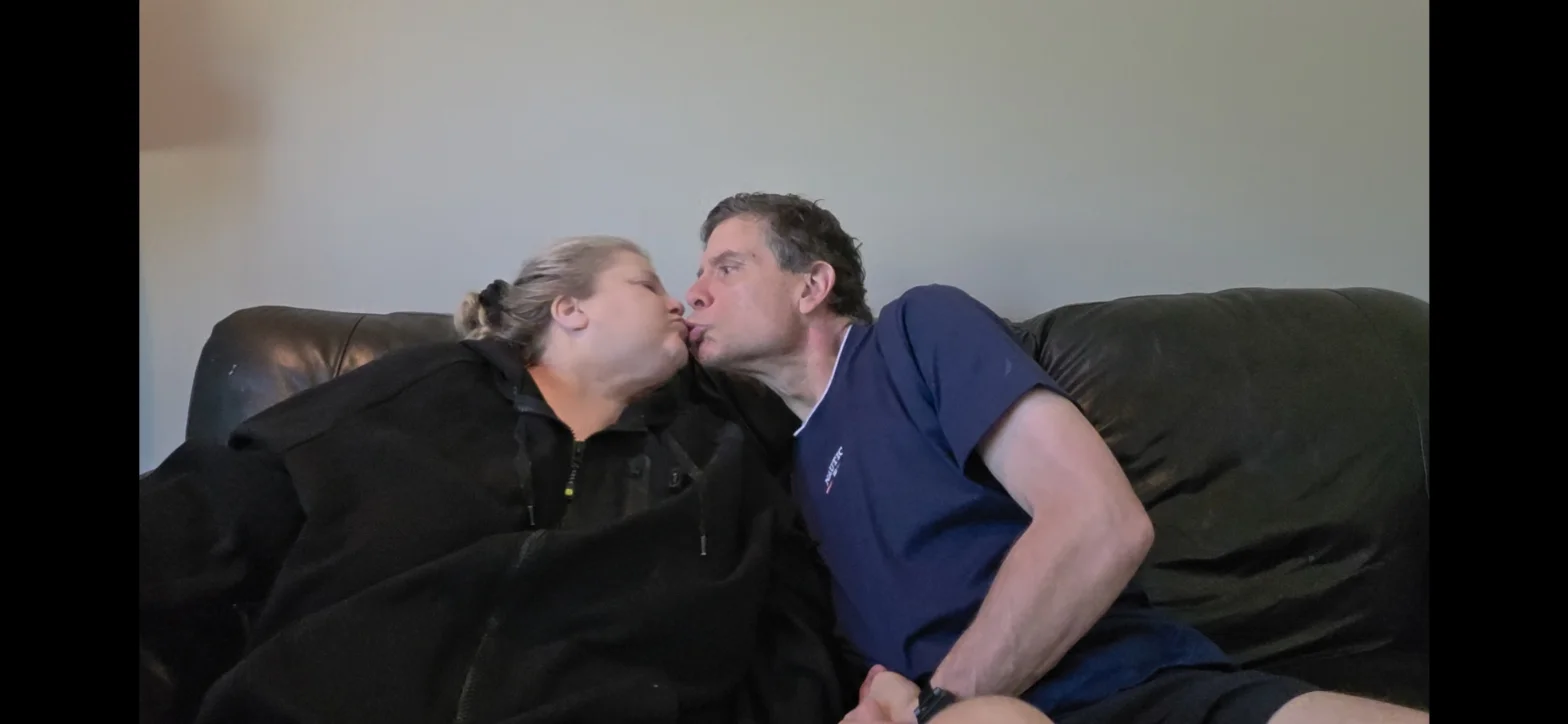
When I was at my worst, Hayley was the one seeing the whole picture. She could track how different I was from baseline. She could tell that this was not normal brain fog, not ordinary tiredness, not just a rough OFF spell.
That distinction matters because hospital staff may only see a snapshot. The caregiver sees the before and after.
If you are the caregiver, don’t be shy about being specific:
- This is a sudden change.
- This is not his normal.
- His cognition is worse.
- His movement is worse.
- His medication response is different.
- I am concerned about infection, dehydration, or both.
That kind of clarity can move the conversation in the right direction much faster.
If caregiving is part of your life right now, the broader caregiving hub is here: Caregiving.
The Walk Out of the Room
Caregivers carry more than most people see.
There are moments when the stress, fear, frustration, and exhaustion all hit at once. Sometimes the most human thing a caregiver can do is walk out of the room for a minute, cry, breathe, regroup, and come back.
That is not abandonment. That is survival.
I think we need to say this more openly in the Parkinson’s world. Caregivers are not robots. They are not bottomless wells of patience. They are people trying to keep someone safe while also watching the person they love suffer.
That emotional toll deserves honesty, not guilt.
What I Wish Someone Had Told Me
If I were making a caregiver emergency checklist now, it would include this:
- Keep an updated medication list ready.
- Know the diagnosis timeline and major symptoms.
- Track what “normal” looks like so you can describe what changed.
- Mention swallowing, cognition, falls, and orthostatic symptoms if relevant.
- Bring water, snacks, chargers, and whatever helps you endure a long wait.
- Speak up early if medication timing is getting missed.
- Trust your instincts if something feels very wrong.
For more caregiver-focused reading, these are worth bookmarking: – Talking with Love and Respect: Parkinson’s Caregiving – 3 Caregiving Mistakes: Accepting Help in Parkinson’s – Parkinson’s, Stress, Anxiety, Role Changes, and Boundaries
And honey, if you’re reading this — I really do appreciate everything you do.
When the person with Parkinson’s can’t advocate clearly, the caregiver’s instincts can be life-saving.
The Recovery Timeline: What’s Realistic
One of the most frustrating parts of this whole experience was realizing that recovery did not end when the most obvious danger passed.
Nobody told me how long the recovery could take.
8 to 16 Weeks Is Not Unusual
People hear infection and think: antibiotics, rest, done.
Sometimes that’s true.
But sometimes the infection is only the beginning of the story. Your body still has to recover from the inflammation, the stress response, the medication instability, the sleep disruption, the deconditioning, and the emotional crash that comes with the whole ordeal.
That recovery can take weeks. Sometimes months. From everything I’ve read online and from what my family doctor thinks, 8 to 16 weeks is a realistic frame for this kind of recovery in Parkinson’s.
That matters because if you expect to bounce back in a few days, you may think something is terribly wrong when the truth is simply that Parkinson’s recovery often runs on a much longer clock.
When Your Baseline Shifts
This is the hard part.
Sometimes you come back to exactly where you were before.
Sometimes you do not.
That does not mean all hope is lost. It means you may need to re-learn your body a little. Medication timing might need adjusting. Expectations may need adjusting. Your neurologist may need a clearer picture of what changed and what hasn’t come back yet.
That conversation is not easy, but it is important. Recovery is not just about clearing the infection. It is about understanding your new baseline honestly.
The BeechBand Moment
For me, one hopeful part of the recovery story was realizing that not every improvement has to come from adding more medication.
Sometimes the breakthrough is finding the right tool.
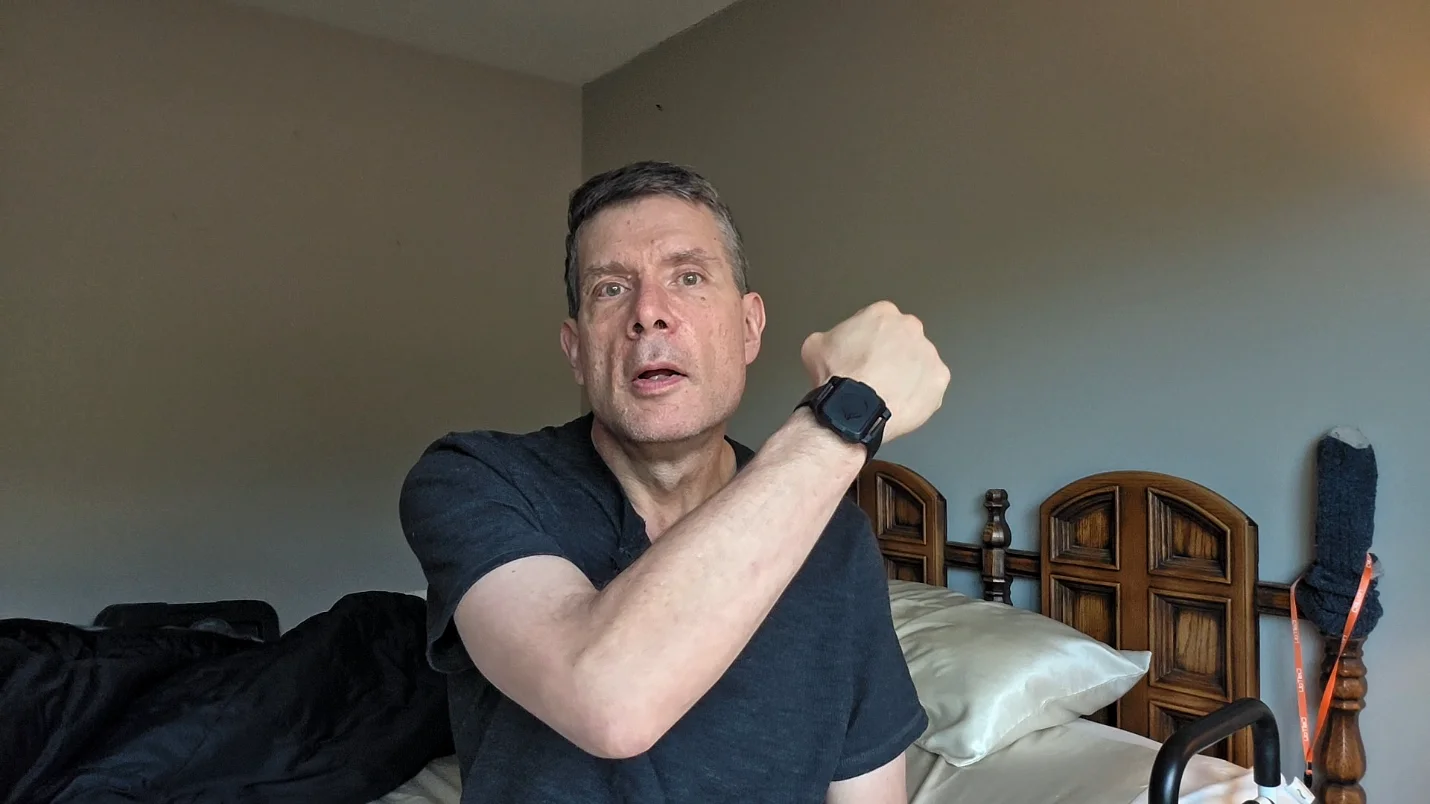
One of those tools for me has been the BeechBand, a product created by Carl Beech in the UK. It is not a sponsor, affiliate, or paid placement. I’m mentioning it because it became part of my real recovery story.
It is worn on the wrist like a watch, and its whole mechanism is mechanical vibration. That’s it.
What stood out to me was not some miracle cure narrative. I don’t believe in that. What stood out was the way the right tool helped reduce my dyskinesia by around 60% and gave my nervous system a bit of a better platform.
If you want the fuller explanation, here’s the video: The Parkinson’s Disease Product That Changed My Life.
That doesn’t mean the same product will do the same thing for everyone. But it does mean hope sometimes arrives through practical experimentation, not just through suffering in silence.
Why I’m Still Optimistic
I know this has been heavy.
But here is why I wrote it.
The danger is not just Parkinson’s complications themselves. The danger is not knowing they exist.
Once you understand that Parkinson’s changes your response to infection, dehydration, medication disruption, and stress, you can start protecting yourself differently. You stop dismissing confusion. You stop brushing off hydration. You stop assuming a small infection is a small problem. You build a better emergency radar.
That doesn’t remove the hardship. But it does reduce the mystery.
And reducing the mystery matters.
If you’re newly diagnosed and trying to understand the bigger picture, start here: What is Parkinson’s Disease? A Comprehensive Guide.
If you’ve been living with Parkinson’s for a while and want a real-world warning about how fast things can escalate, read this next: Parkinson’s, Paronychia, and the Infection That Nearly Took Me Out.
If you’re a caregiver, the best next stop is here: Caregiving.
I firmly believe that every one of you is doing the best you can with the circumstances you are in. I hope you never forget that. And I hope this post helps you do a little bit better.
Let’s continue to take this journey together.
External Resources
If you want more medical background alongside lived experience, these are good places to start:
- Parkinson’s Foundation: Autonomic dysfunction overview
- Michael J. Fox Foundation: Parkinson’s-related research and educational resources
- Medical literature on infection, delirium, and Parkinson’s cognitive decline
Meta Description Idea
Parkinson’s disease makes everyday dangers like infection and dehydration far more serious. David shares his story, caregiver lessons, and a practical emergency protocol for families.
Help Keep Life With Parkinson’s Going
This site and the YouTube channel run on lived experience and a lot of love. If posts like this one help you or someone you care for, here are two ways to keep the work going – both are completely optional and either one means a lot.
Subscribe to the Newsletter
I send occasional notes – new posts, lessons, and things I wish I’d known sooner. No spam. Easy to unsubscribe.
Become a Channel Member
Channel members support the videos directly on YouTube and get a few perks along the way. If you watch the channel and want to chip in, this is the easiest way.