

I’m David Gebhart, and at 52, I’ve been living with Parkinson’s for a while now. I remember when I first heard about sound therapy and tuning forks, I was really skeptical. It sounded like new-age fluff at best. “How could a little metal fork make a difference to brain chemistry?” I thought. But after years of trial and error, I finally had an “aha” moment that changed everything.
One night, I was dealing with pretty intense dyskinesia. It wasn’t anything unusual for me, but it was one of those moments where you’re just trying to find anything that might calm things down. Around that time, a researcher friend of mine had suggested experimenting with a 128 Hz frequency using bone conduction—basically getting that signal into the body in a way that could reach the head.
So I tried something simple.
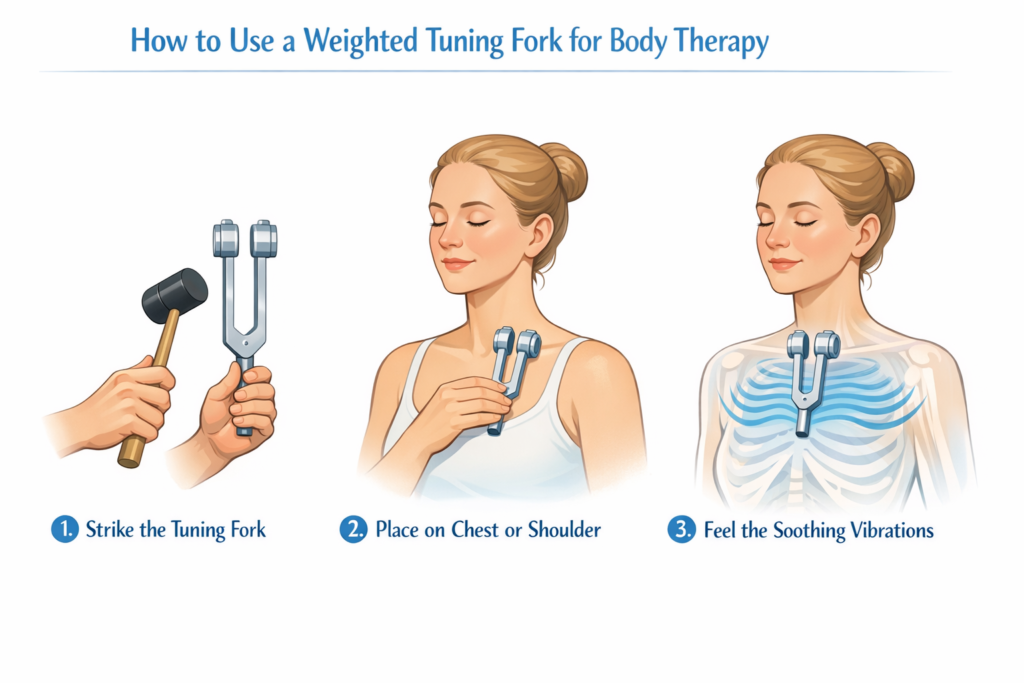
I used a 128 Hz tuning fork and applied it directly to my chest while it was actively vibrating.
What happened next honestly caught me off guard.
As long as that fork was active and in contact with my body, the dyskinesia settled down significantly. The moment I removed it, the symptoms would start to return. I repeated it a few times just to be sure I wasn’t imagining things—and the result was consistent.
That was a real “aha” moment for me.
It wasn’t planned. It wasn’t part of some structured protocol. It was just a random experiment that ended up showing me something I hadn’t experienced before—that a specific frequency, applied in a specific way, could have an immediate and noticeable effect on my symptoms.
Since then, I’ve continued exploring different frequencies and applications. For example, when it comes to sleep, I’ve personally found that using a pineal gland tuning fork works better for my insomnia than the 128 Hz fork. That’s been my go-to in those situations.
Now, I want to be very clear—what I’m sharing here is my personal experience. But it was strong enough, and repeatable enough, that it pushed me to dig deeper into sound therapy and how it might support people living with Parkinson’s.
In this guide, I’m going to walk you through what I’ve learned so far—what sound therapy is, how concepts like entrainment are often explained, and how different frequencies are being used. I’ll also show you exactly how I apply these tools myself, so if you’re curious, you can explore this safely and see what works for you.
What is Sound Therapy for Parkinson’s?
Sound therapy is any technique that uses tones or music to influence the body and brain. The core idea is “entrainment”: our brains and bodies naturally sync up to external rhythms. For example, if you tap your foot to a beat, eventually your footsteps match that rhythm. Similarly, steady sound frequencies can help “tune” brain and body waves.
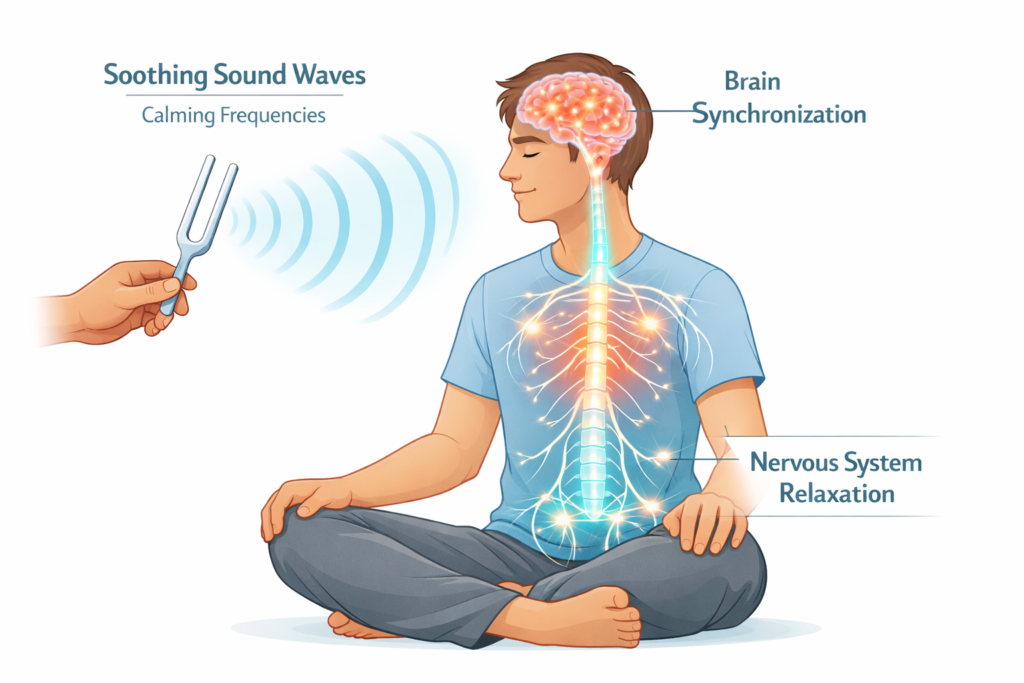
In Parkinson’s, studies show that rhythmic auditory cues can improve movement. Listening or playing music “may be beneficial” for Parkinson’s, improving step length, timing, coordination, and balance. One trial found that walking to a steady beat significantly increased stride length and walking speed compared to walking without sound. This is called Rhythmic Auditory Stimulation (RAS). By tapping a foot or taking steps in time with a beat, the brain “entrains” your movements to be steadier. Over time, regular rhythmic practice can restore some internal timing mechanisms that Parkinson’s has disrupted.
Beyond rhythm, the frequencies themselves matter. Sound therapy for Parkinson’s often uses pure, sustained tones—like those from tuning forks—to create a gentle vibrational field. When you strike a tuning fork, it emits a very pure tone (a specific Hertz frequency) and often a physical vibration if it’s weighted. These vibrations can resonate with the body and mind. People with Parkinson’s have reported that gentle sound and vibration can ease stiffness and tremor. For example, vibroacoustic therapy (which mixes music with low-frequency vibration) has been shown to reduce body stiffness and tremors, and even lengthen stride in PD patients.
In practice, sound therapy aims to reduce stress hormones, relax muscles, and stabilise movement. For instance, simply listening to calming music has been proven to lower cortisol (the stress hormone) and improve mood in many populations. One small study of nurses found that listening to music at 432 Hz lowered anxiety and cortisol more than standard 440 Hz music. Another study showed that music at 528 Hz (sometimes called the “love frequency”) significantly reduced stress and anxiety scores, and 528 Hz specifically lowered cortisol and raised oxytocin (the “bonding” hormone) after just a few minutes.
Key takeaway: Sound therapy is a complementary, gentle tool. It won’t cure Parkinson’s, but by engaging the brain’s auditory and motor networks, it can motivate movement, reduce tremor, ease rigidity, and calm anxiety. Think of it as a biological “reset button” that you can push with sound vibrations. (Of course, always continue your medical treatments – sound is a helpful ally, not a replacement.)
How Tuning Forks Work on the Nervous System
In sound therapy, we use two main types of tuning forks: Weighted (body) forks and Unweighted (sound) forks.
Weighted Tuning Forks (Body Forks):
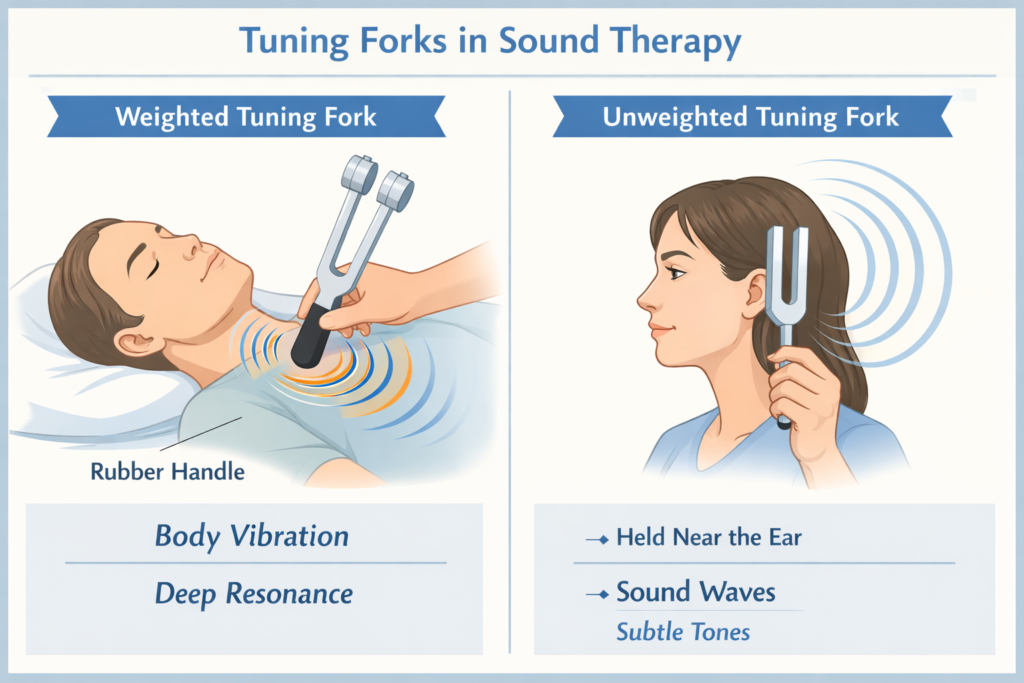
These have a rubber or wooden handle on the stem (often called an “Otto” fork). When you strike a weighted fork against a surface or mallet, the heavy handle causes strong mechanical vibrations. You then place the base of the fork on your body – for example, on your sternum, spine, or a tight muscle. The vibration flows through your tissues. Imagine a massage, but with pure vibrational energy. The fork’s deep tone literally vibrates your bones, nerves, and muscles. This can help the nervous system “entrain” in a physical way. Many of us have found that a 128 Hz weighted fork on a tense spot can ground the shaking. In practice, using a 128 Hz fork on my chest or back often slows down my tremors and relaxes my stiff muscles.
Scientific studies support this notion of vibration reducing PD symptoms. For instance, vibroacoustic therapy—which is like lying on a speaker playing low tones—significantly reduced tremor and rigidity in people with Parkinson’s. While a tuning fork is less intense than full-body vibroacoustics, it concentrates the effect on a small area, which can still give immediate feedback to the nervous system. One study of sound vibration found it dampened involuntary shaking by giving the brain a steady reference signal. In my own case, every time I use a heavy tuning fork on my chest or joints, my hands tend to stop convulsing wildly – the fork seems to be “leading” my muscles into a steadier beat.
Unweighted Tuning Forks (Sound Forks):
These are the classic metal forks (no added handle). You strike them and hold them in the air, typically near your ears or around your head. The focus here is the audible tone and gentle vibration felt through sound waves. Because they don’t have a heavy weight, they don’t drive into the body as strongly; instead, they create a light auditory “bath.” When you sweep an unweighted fork around your head or ears (like scanning in front, behind, above), it stimulates your brain’s auditory pathways. This can induce relaxation or even drowsiness.
Unweighted forks can also be used on reflex points. Placing the vibrating stem on your palm or sole sends sensory input through nerves to the brain. This can help co-regulate the nervous system. For example, lightly touching a vibrating fork to the forehead or face can carry calm into the mind. This is similar to binaural-beat therapy, which aligns brainwaves, but with a real instrument.
In short, both types of forks send signals through the nerves – weighted forks through muscles and bones, unweighted forks through ears and touch. The goal is to encourage your nervous system to “sync up” to the fork’s stable signal. In practical terms, weighted forks are great for physical stiffness and pain, while unweighted forks are excellent for mental calm and sleep. Together they give you a broad toolkit to target various Parkinson’s symptoms.
The Best Frequencies for Parkinson’s (The “Magical Numbers”)
Not all tuning fork tones are the same. Over the years, I’ve identified a handful of “go-to” frequencies that consistently help with PD issues. Here are the most useful ones:
128 Hz (C note Otto Fork):
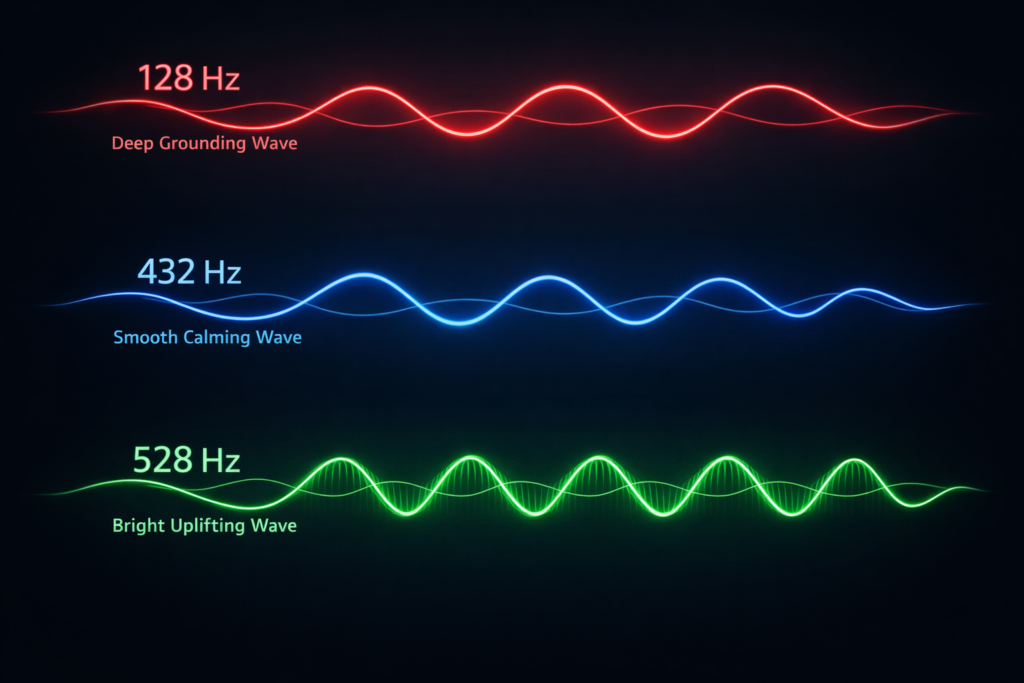
This low, powerful tone is often called the “Master” fork in some circles. The Otto 128 Hz weighted fork is my workhorse for physical symptoms. It’s tuned to the C note (based on A=432 Hz, though whether you use 440 or 432 isn’t critical). Because it’s heavy and low, it penetrates deep into the body. I use 128 Hz for stiff muscles, joint pain, and even strong dyskinesia. For example, if my legs feel rigid or my back is tight, I’ll strike the 128 Hz fork and hold it on the target area. Gradually, I feel the shakes in my legs slow and the muscles relax.
This isn’t just my anecdote – 128 Hz Otto forks are widely used in bodywork for relaxation and pain relief. One product description by SomaEnergetics notes that the 128 Hz fork “relieves muscle tension, spasms, and can be effective with pain”. In a way, it’s like an instant low-frequency massage. After minutes of using it, I often feel “more grounded” and less frazzled. In fact, my wife and I both noticed my hands looking steadier after a session with the 128 Hz fork.
432 Hz:
Often called a “universal pitch,” 432 Hz is thought to have calming effects. A small trial (with emergency nurses) found that listening to music tuned to 432 Hz reduced stress and heart rate more than the same music at 440 Hz. In that study, nurses who listened to 432 Hz music had a bigger drop in heart rate and reported feeling calmer than those who heard the 440 Hz tracks.
In practice, a 432 Hz tuning fork has a soothing, gentle quality. Some people use it during meditation or to calm down midday. It’s not as deep as 528 or 128, more airy. Sweeping a 432 Hz fork around the ears for a minute when the mind is racing can feel like a warm hug of sound. Many people describe 432 Hz music as “smoother” and more relaxing; even if the evidence is subtle, 432 Hz often feels easier on the ears. (Try listening to a pure 432 Hz tone – you’ll notice it has a mellower vibe than a regular 440 Hz tone.)
528 Hz (“Love” frequency):
This bright, buzzing tone is often labelled the “love frequency” or linked to DNA repair in New Age circles. We’ll skip the DNA talk, but in simpler terms, 528 Hz tends to uplift mood and clear brain fog. Many users report reduced anxiety and tension with 528 Hz. Scientifically, in a controlled trial, listening to music at 528 Hz significantly lowered cortisol and raised oxytocin compared to the same music at 440 Hz.
For those feeling anxious, using a 528 Hz tuning fork can amplify this calming effect. Striking the fork and holding it near the ears allows the clear, gentle tone to clear mental static and foster a sense of clarity. After a few minutes, one may breathe more easily and think more clearly. In this way, 528 Hz often feels like “emotional first aid” for anxiety.
(Hear It Now: In our online guide, we’ve added short sound clips of these frequencies so you can listen. Sound therapy is meant to be heard, not just imagined!)
(Note: There are many other interesting forks out there (4096 Hz crystal forks for clarity, OM 136.1 Hz for grounding, etc.), but I’ve found the above three to cover most Parkinson’s needs.)
Step-by-Step: How to Use Tuning Forks at Home
Using tuning forks is pretty straightforward once you know the spots and methods. Here are two simple protocols tailored for PD symptoms:
Protocol 1 – For Stiffness and Pain (Weighted Forks):
For this approach, you’re going to use an unweighted tuning fork—just a simple metal fork without any added handle weight.
To activate it, most people use something like a hockey puck or a similar firm rubber surface. That gives you a clean strike without damaging the fork and produces a consistent vibration.
Once the fork is vibrating:
Ear Scanning:
Hold the active fork a few inches away from your ear and slowly move it around your head. Try different positions—just in front of the ear, down near the neck, above your head, and slightly behind you. You’re not trying to be precise here. Just let the sound move around you and notice how it feels. Then repeat the same process on the other side.
You can also experiment by lightly applying it to different points on the body, like your hands or feet, but I usually keep this part simple.
Breathing with the Sound:
As you’re doing this, focus on your breathing. Slow it down. Let it become steady and relaxed. You don’t have to perfectly sync it with the tone—just use the sound as something to anchor your attention.
Duration:
Spend about 2 to 5 minutes total. If you’re comfortable, close your eyes and just let the sound do its thing.
What this creates is more of a gentle sound “field” around your head rather than a direct application like the weighted fork. In my experience, this approach is more about calming things down than stopping something like dyskinesia.
For sleep, I’ve personally had better results using a pineal gland tuning fork rather than relying on something like 128 Hz. That’s been more effective for me when dealing with insomnia.
If your mind is racing at night, this kind of simple sound work can help take the edge off. It’s not about forcing sleep—it’s more like giving your system a signal to slow down. Sometimes after a few minutes, you’ll notice your thoughts aren’t as intense, and your body starts to settle.
At the very least, it gives you something to focus on other than the frustration of not being able to sleep—which, on its own, can make a difference.
Quick Note:
I’ve also put together a simple 5-minute routine you can use as a starting point—combining a short weighted fork session with a brief unweighted session like this. It’s nothing complicated, just a structured way to experiment and see what works for you.
Complementary Therapies: Combining Sound with Movement
Remember, tuning fork therapy is one tool in your toolkit, not a magic cure. It works best alongside movement and exercise. Here are a couple of great sound-movement combos:
- Rhythmic Auditory Stimulation (RAS) for walking: This is essentially walking or stepping in time with a steady beat (metronome or rhythmic music). Studies consistently show RAS improves gait in Parkinson’s. For example, people who walked to a metronome or drumbeat took longer strides and walked faster than without sound. Even tapping your foot to a beat helps “time” your steps. I sometimes use my phone’s metronome app at a comfortable tempo. Walk around the house or park to that steady rhythm. It tricks the brain into stepping more regularly. Over time, RAS can reduce episodes of freezing and make walking feel more fluid.
- Tuning Fork + Stretching or Massage: While a fork is vibrating on your shoulder or back (Protocol 1), you could gently stretch that muscle. This double stimulus (vibration plus movement) might enhance relief. I often combine a 128 Hz session on my hip with slow hip rotations or on my neck with gentle tilts.
- Sound Meditation: Use tuning forks as part of your mindfulness practice. Strike a fork and focus on the tone like a mantra. For instance, I strike a 4096 Hz crystal fork (a very high, clear tone) and let its ring fade, focusing on the silence that follows. This practice, though not specific to PD, helps with mental clarity.
The goal is to integrate sound into daily life. For example, some people set a timer to take a “sound break”: close eyes, breathe, and use a fork for 2–3 minutes. Or listen to soft 432 Hz music during a short walk. The idea is to use rhythm and vibration to support whatever you’re already doing (therapy, exercises, meditation, etc.).
Safety & Precautions
Sound therapy with tuning forks is generally very gentle, but a few precautions are wise:
- Implants (Pacemaker/DBS): If you have a pacemaker or deep brain stimulator (DBS) implant, be careful with weighted forks. Do not place them over your chest or head where the vibration could interact with the device. Instead, focus on using forks on your legs, arms, or points far from the implant. The vibrations we’re using are low-intensity, but it’s best to consult your cardiologist or neurologist if unsure. (As a rule: avoid heavy vibration directly on any implanted electronics.)
- Stuck to Bones?: Weighted forks can tickle or bruise if hit too hard. Always tap them gently. Use a soft mallet or your hand, not hard surfaces. Never strike so strongly that a tine could break.
- Head/Ears: When doing ear-scanning with unweighted forks, keep the fork a couple of inches from your ears. Don’t press it directly against the ear canal or skull. Some people have a mild startle if the sound is too loud up close. Also, if you have a history of seizures, check with a doctor before using intense sound stimuli.
- General: Avoid using forks on open wounds, broken skin, or fractured bones. Do not place a fork on the eyes or throat. If you ever feel dizzy, nauseous or overly agitated during a session, stop and rest.
- Pregnancy: While most Parkinson’s readers aren’t expecting, as a general safety tip: don’t apply weighted forks to the abdomen if pregnant. (Sound therapy around the belly is usually very mild anyway, but caution rules.)
Recommended Gear
You don’t need a huge arsenal to begin. Here’s a starter kit of forks I use (brand: SOMA Energetics):
- Otto 128 Hz Weighted Fork – My go-to for stiffness and pain. (Available via SOMA Energetics here.)
- Pineal Gland 480 Hz Fork – A low fork specifically tuned for sleep rituals. (SOMA sells a “Pineal Gland” fork at 480 Hz.)
- Solfeggio 528 Hz Fork – A smaller unweighted fork, great for anxiety relief.
- Crystal 4096 Hz Fork – High, bright tone used for clarity and intention-setting (usually done with a wooden handle or mallet).
- OM 136.1 Hz Fork – A grounding tone (the universal “OM” pitch). I often use it on my chest or third eye for emotional balance.
Start with 2–3 forks (for example, 128 Hz weighted and 480 Hz pineal, plus maybe a 4096 Hz crystal). Then expand as you see fit.
Affiliate: As part of our affiliate program, you can find high-quality tuning forks at SOMA Energetics (they make all the forks listed). Use promo code LIFE10 for 10% off your first order – just a thank-you for supporting this work.
Pro Tip: Keep your daily-use forks in a visible spot (like next to your bed or computer). The more they’re out, the more you’ll remember to use them as part of your routine.
Conclusion & Daily Routine
In closing, sound therapy has become a meaningful part of my Parkinson’s journey. It’s not a quick fix, and I don’t follow any strict daily routine with it. What I’ve found instead is that I use it as needed—depending on what my body is doing in the moment.
So rather than a fixed schedule, think of this as an example of how someone might use tuning forks throughout the day:
Morning (example – 5 minutes):
Some people like to start the day with a quick session to loosen things up. That could mean using a 128 Hz fork on areas like the chest or shoulders to help with stiffness. It’s a simple way to check in with your body first thing in the morning.
Afternoon (as needed):
If symptoms like anxiety, shakiness, or restlessness start to creep in, you might take a short break and use an unweighted fork. Gently moving the sound around your head while focusing on your breathing can help shift your attention and settle things down a bit.
Evening (wind-down – 10–15 minutes):
At night, this is where I’ve personally done the most experimenting. Some people create a small “sound ritual” before bed—using higher-frequency forks around the head, followed by something like a pineal gland fork to help signal that it’s time to rest.
For me, the pineal fork has been the most helpful when it comes to sleep. That’s something I come back to more consistently than anything else.
“It’s like a gentle cue to my brain: ‘Hey, it’s time to slow down.’”
That’s the best way I can describe it.
The key here is flexibility. Some days you might spend more time with it, other days just a minute or two. There’s no perfect routine—and in my experience, it’s better to stay adaptable and respond to what your body needs in that moment.
Have you tried tuning forks or sound therapy for Parkinson’s? I’d be genuinely interested to hear what’s worked for you. Different people respond to different approaches, and sharing those experiences can really help others who are exploring this path.
A Note for Caregivers & Supporters
If you’re caring for someone with Parkinson’s, tuning forks can be a wonderful tool in your kit. You can assist by gently applying a fork to their sternum, back, or limbs (of course, only with their permission and comfort). Many caregivers note that being involved in a sound session is a soothing, shared experience. It gives you both something positive to focus on. Just remember the safety points: avoid any implanted areas and always go slow. Even for caregivers, the calm sound can reduce stress – consider joining them in a tuning-fork or music session to relax together.
Safety Review: Keep forks away from the chest if the person has a pacemaker/DBS. And of course, never force any movement. If the person feels any discomfort, stop immediately. Always coordinate with their doctor, especially if they have other health issues.
Medical Disclaimer
I am not a doctor. This article is not medical advice, but rather a personal account and general information on sound therapy for Parkinson’s. Always consult a qualified healthcare professional before trying new treatments. Individual results vary.