




Key Takeaways
- Symptoms vs. Perception: Parkinson’s causes tremor, stiffness, slow movement, balance problems, and speech changes – symptoms that can be misinterpreted as intoxication.
- Real Incidents: News stories (e.g., a UK Olympic spectator or a Florida arrest) show how misunderstanding PD can harm individuals and erode trust.
- Training Gap: Studies show almost no police academy training covers Parkinson’s; officers often do not recognize PD symptoms. Even a brief PD awareness module could greatly improve outcomes.
- Practical Steps: PwP should carry medical alert cards (“I have Parkinson’s – I am not intoxicated”), and calmly explain symptoms during encounters. Caregivers can prepare and advocate; police should practice patience, clear communication, and utilize existing PD training resources.
- Community Action: Increased collaboration – police attending PD community events, PD organizations providing first-responder training – fosters mutual understanding. Awareness worldwide protects everyone’s safety and dignity.
Imagine a parent with Parkinson’s standing in their driveway, hands trembling from the disease, and police arrive expecting trouble. Without understanding, an officer might mistake those tremors or rigid stance for intoxication or noncompliance. This scenario is tragically common. Parkinson’s symptoms like tremor, slowness (bradykinesia), muscle stiffness (rigidity), and soft or slurred speech can easily be misread by an uninformed observer. As a result, people with Parkinson’s (PwP) and their caregivers often feel anxious in public or during police encounters, fearing misunderstanding. This post explores why PD awareness in law enforcement matters, how media-highlighted incidents show the gap, and what everyone – patients, families, and police – can do to improve safety and understanding.
Parkinson’s Symptoms vs. Public Misconceptions
Parkinson’s disease affects movement in diverse ways. The classic motor symptoms include resting tremor (a shaking hand or limb), bradykinesia (slowness of movement), and rigidity (stiff muscles). Many PwP also develop trouble with balance, stiff or shuffling gait, masked facial expression (“masking”), and a soft monotone or slurred voice. These symptoms are well-documented by Parkinson’s foundations and medical sources.

Non-motor symptoms – often invisible to others – can include cognitive slowing, confusion, or difficulty speaking, which may be mistaken for intoxication or disorientation. For example, slowed speech or balance issues in PD have led 22% of people with Parkinson’s in one UK survey to be wrongly accused of being drunk. Nationwide surveys find that most PwP report facing prejudice: 9 out of 10 say they’ve been harassed or told “you don’t look sick”. In short, everyday Parkinson’s symptoms are frequently misinterpreted as intoxication or suspicious behavior, not only by strangers but even by well-meaning officials.
These misunderstandings have real consequences. A recent study of traffic stops found people with Parkinson’s were significantly more likely than controls to feel they were mistreated or misclassified as intoxicated. And with Parkinson’s growing rapidly – over 1 million Americans are projected to have PD by 2030, making it the fastest-growing neurological disorder worldwide – encounters with law enforcement are only set to increase.
High-Profile Encounters Highlight the Issue
Media reports illustrate the stakes. In July 2012, UK police handcuffed Mark Worsfold, a 54-year-old spectator with Parkinson’s at the London Olympics, simply because he wasn’t smiling. Officers saw his rigid, expressionless face and assumed his behavior was “causing concern.” Worsfold explained he was “arrested for not smiling… I have Parkinson’s”. Parkinson’s UK noted this was “illustrative of the kind of chronic misunderstandings people with Parkinson’s have to deal with regularly,” including being accused of acting drunk or suspiciously.
More recently in Florida (2026), bodycam footage captured Orange City police officers taking 79-year-old Edward Bowman – who has Parkinson’s – to the ground during a family dispute. Family members and witnesses say Bowman was on his knees, telling officers he couldn’t comply and was being hurt, but the arrest report charged him with resisting and battery. The police chief is reviewing the video amid calls for accountability. Fox35 News noted that “the NIH says [Parkinson’s] leads to tremors and balance problems” and can make a person slow and stiff – symptoms clearly visible in Bowman’s struggle. The family and public reaction underscore how a simple lack of awareness can escalate into injury and trauma.
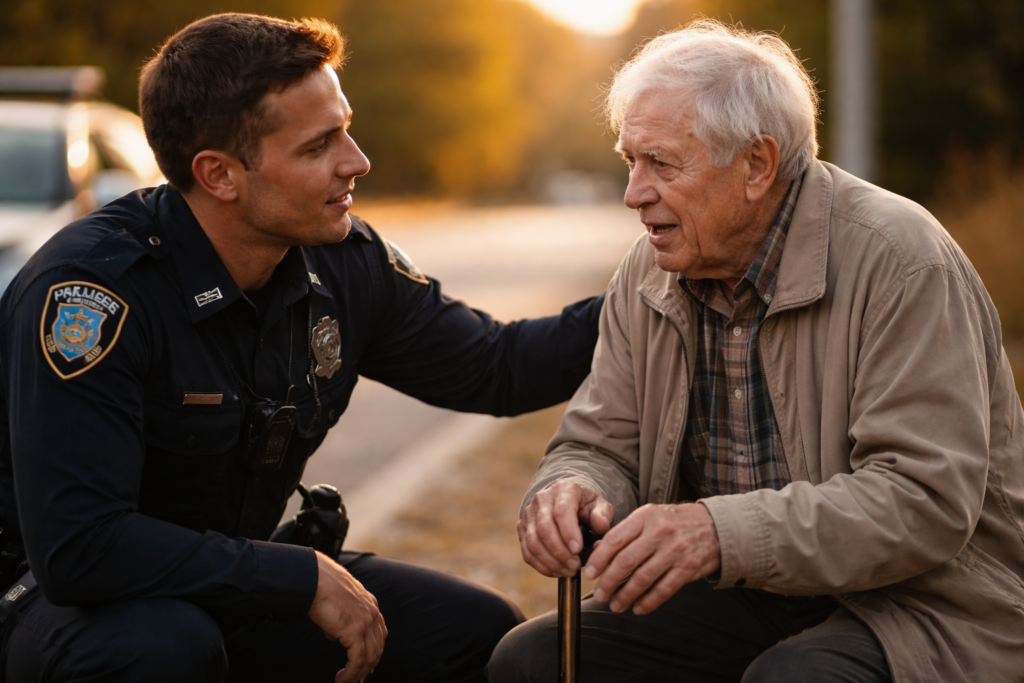
In each case, media coverage drew public attention to the misunderstanding: in the UK, a major newspaper exposed the Olympics incident, and in Florida, local TV news did so. These stories help raise awareness nationwide, but they also reveal a gap: why wasn’t the disease recognized and handled differently from the start? Globally, similar reports surface now and then – highlighting that Parkinson’s is not just an “old people’s disease,” but a condition that people of any age can have. With 6 million people worldwide living with Parkinson’s today, every police department can expect to encounter someone with PD.
For More real-world cases and media coverage of Parkinson’s Police encounters.
Why Awareness Matters – A Personal Perspective
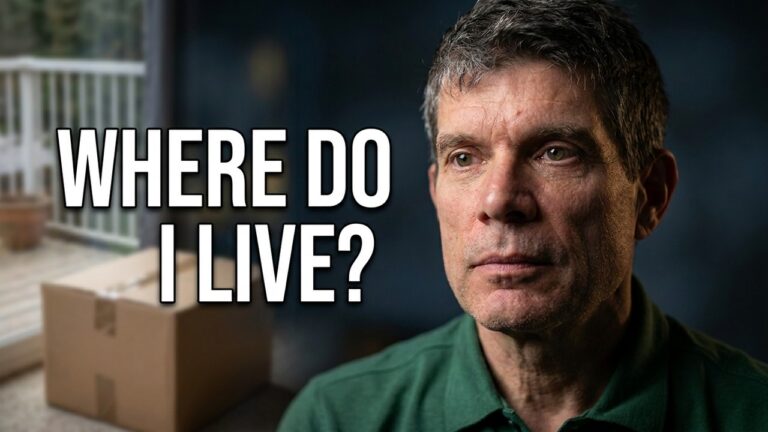
I’m David, and I live with Parkinson’s. On the outside, I may not always look the way I feel on the inside. There are days when I’m genuinely happy — but my face doesn’t show it. That “blank face” look, as I sometimes call it, can confuse people. I’ve been asked more than once, “Why aren’t you smiling?” — even when I was having a perfectly good day.
That question might seem harmless, but it can be surprisingly disarming. It draws attention in a way I don’t want. Parkinson’s has this way of making you stand out when all you want is to blend in.
Before my diagnosis, I was a very social person. I enjoyed conversations, meeting people, even considered becoming a pastor. Being around others gave me energy. But over time, something shifted. Not just physically — but internally too.
Now, I often find myself avoiding interactions. I’ll choose quieter times to go out. If I see someone I know, I might step into another aisle or keep my head down. Not because I don’t care — but because it’s easier than explaining something that’s hard to see.
There’s a real conflict there. I’m still that same person inside — someone who enjoys people — but Parkinson’s has changed how I show up in the world. And finding a balance between who I was and who I’ve become is something I’m still working through.
One moment that stayed with me happened before I was even diagnosed. A homeowner I was working for asked me why I looked so unhappy. It caught me completely off guard. I was fine — I was actually having a good day — but clearly, that’s not what they saw.
That was the first time I realized something might be off.
I had an experience that took that misunderstanding to another level. I was in a store I’d visited many times before. Like usual, I was using my backpack — something that had simply become easier for me due to mobility and coordination challenges.
Without warning, I was loudly confronted and accused of doing something wrong. The situation escalated quickly. My anxiety spiked, my thoughts became foggy, and all I wanted to do was leave.
I remember thinking: How did this turn into this?
I wasn’t trying to cause trouble. I was just trying to shop.
Later, with the help of my family, the situation was addressed and an apology was issued. But the impact of that moment didn’t just disappear. It stayed with me — the confusion, the embarrassment, the questioning of whether I was still capable of doing everyday things on my own.
That’s the part people don’t always see.
Living with Parkinson’s isn’t just about tremors or slow movement. It’s also about how the world responds to those symptoms — especially when they’re misunderstood.
This is why awareness matters.
Not for sympathy. Not for special treatment.
But for understanding.
Because sometimes, the person who “doesn’t look right” is actually doing their best just to get through the day.
Steps Everyone Can Take: Practical Guidance
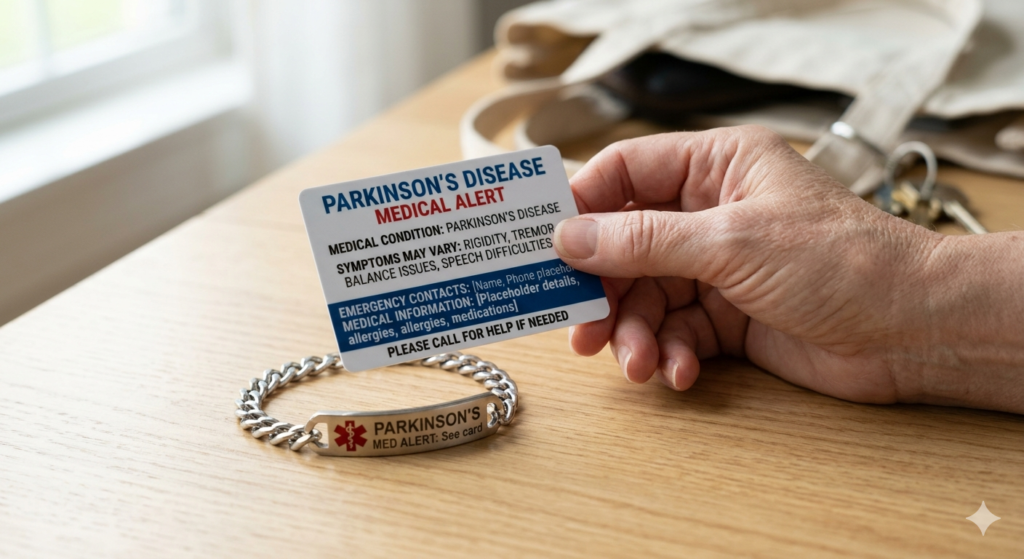
For People with Parkinson’s (and Loved Ones): You can’t control how others react, but you can take steps to prepare. Carry a Parkinson’s medical ID card or emergency card (APDA and Parkinson Canada both recommend them) that explains the diagnosis and notes “I am NOT intoxicated”. Showing this to an officer or first responder can immediately clarify why you move or speak the way you do. Always keep your medication schedule and doctor’s contact info accessible (even a note from your doctor helps, as Parkinson Canada suggests). If you feel able, calmly explain your condition when approached (“I have Parkinson’s, please be patient; my hands are shaking and I may move slowly”).
- Stay calm and composed. If an officer gives orders you don’t immediately follow, gently explain it’s because your body is stiff or slow. Shaking can be embarrassing, but trust that most officers want to help once they know the truth.
- Plan and communicate. Share your Parkinson’s details with family, friends, and possibly the local PD association. Let caregivers know how to best help you. In urgent situations (like accidents or detainment), having someone present who can mention your PD or having a medical alert bracelet can make a difference.
- Know your rights. If you carry a medical card or bracelet, kindly remind officers of your condition. You have the right to answer questions once you’re ready – but if medication delays your response, communicate that. You could even inform the officer that Parkinson’s Canada suggests a doctor’s letter explaining your need for extra time.
For Caregivers and Family: You often act as an advocate. Teach your loved one what to say if stopped (e.g. “I have Parkinson’s disease” and how it affects them). Keep copies of medical details or medications on you when going out. If your family member becomes agitated or confused during an encounter, quietly provide context. After any incident, debrief together and reassure them. Make sure medical support is available in an emergency. Many caregivers find it useful to register their loved one’s condition with local first-response agencies or participate in community PD support groups to spread awareness.
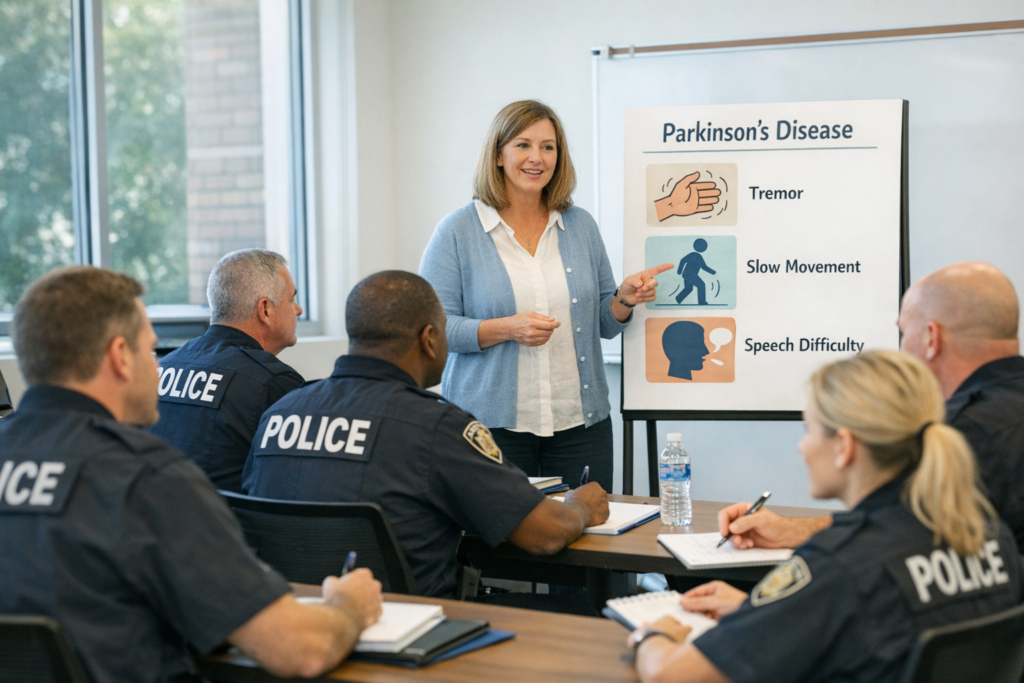
For Law Enforcement and First Responders: Training makes all the difference. Current police academies typically provide no Parkinson’s education – one survey found “Parkinson’s disease was never mentioned during academy training or… recertification”. Departments should change that. Law enforcement agencies can incorporate basic PD info into disability awareness courses. Even a single slide on Parkinson’s – noting tremor, slowness, balance issues, and expressionless face – can alert officers to the possibility. For example, APDA’s first-responder program explicitly warns that “slurred speech or balance issues… can often be misinterpreted as alcohol- or drug-related”. Learn More on Why Police Training is Critical
- Keep calm and communicate clearly. Approach a person who may have Parkinson’s with patience. Speak slowly, give simple commands (people with bradykinesia may need extra time to respond), and allow them to explain if needed. Observe for a medical ID card.
- Consult medical experts when needed. If someone’s condition is unclear, remember paramedics and EMTs are trained in recognizing medical emergencies. However, be aware that calling an ambulance for every PD issue can be disruptive; instead, use your judgement and expertise to treat them with dignity.
- Learn from people with PD. Some police departments already do community events (like the Maine example above) to build rapport. Listening to PD patients and families can improve mutual understanding. Even a 1-2 hour PD awareness session (as offered by Parkinson’s associations) can save confusion.
- Policy and partnerships. Agencies can review policies to ensure officers know about resources. For instance, New Jersey law now mandates Parkinson’s training for first responders. Advocates recommend national adoption of such laws.
By improving law enforcement awareness of Parkinson’s disease, we protect vulnerable citizens and officers alike. As one PD advocate and former officer noted, even a brief mention of Parkinson’s in training can “encourage officers’ awareness of this critical topic and protect PwP”
.
Building Awareness – The Road Ahead
Efforts to increase awareness are underway. National groups and medical organizations emphasize PD as a movement disorder with cognitive aspects, not a behavioral issue. Training programs (like Rutgers/APDA’s online course) are available for free to police and EMTs. Media coverage of incidents – from local news to international press – helps inform the public and policy-makers. Worldwide, Parkinson’s associations campaign to destigmatize symptoms, pointing out (as Parkinson’s UK did) that people with Parkinson’s are often accused of intoxication simply because of tremors or slurred speech.
Ultimately, closing the awareness gap requires community effort. If you see a news story about a police–Parkinson’s incident, share it. Encourage local law enforcement to seek PD awareness training (the APDA course or materials from Parkinson Canada). Support legislation for first responder education. In our own lives, speak up: whether it’s a caregiver explaining your loved one’s disability or an officer asking “is there a medical issue here?”, every conversation can improve understanding.
Together, we can change the narrative. Parkinson’s does not make someone a criminal or troublemaker; it’s a medical condition affecting millions worldwide. By building empathy and knowledge, we ensure that the next encounter with police becomes a moment of care instead of conflict.
Medical Disclaimer
This post is for informational purposes only and does not replace professional medical advice. Always consult qualified health care providers about Parkinson’s disease or any medical condition.
A Final Word – Spread Awareness
Parkinson’s disease touches not just individuals but whole communities. Each of us has a role: if you are living with PD or care for someone who is, share this information with friends, support groups, and local agencies. If you know law enforcement officers, encourage them to learn about Parkinson’s (APDA and other groups offer free resources). Community members can demand empathy – remind each other that outward appearances can be misleading. By talking about these issues, we reduce stigma and build understanding.
Let’s turn the headlines from tragic misunderstandings into stories of compassion. Parkinson’s and police interaction can become safer and kinder, one conversation at a time.
💖 Caregiver Note
As a caregiver, your insight is invaluable. When you or your loved one interact with police, calmly convey the diagnosis and how it affects mobility/speech. Carry written information if needed, and always follow up: if an incident occurs, you have the right to ask for a supervisor or make a complaint if discrimination happened. Also, take care of yourself emotionally – witness to such events can be distressing. Support groups (in person or online) can help you process these experiences. You are not alone, and your advocacy makes a difference every time you speak up on behalf of someone with PD.
☕ Support Life With Parkinson’s (Ko-fi):
If you found this post helpful, please consider supporting our work. By buying us a coffee on Ko-fi or donating, you help keep our blog running and share more resources for people with Parkinson’s, caregivers, and allies. Every contribution – large or small – fuels awareness and hope for our community. Thank you for being part of this journey.